

Share:


Goal Click’s Window To The World exhibition brings first-person soccer stories to New York City — and offers a lesson in turning the camera over to those living the story.
As millions of fans followed the FIFA World Cup in North America this summer, a different kind of soccer story was unfolding in Lower Manhattan.
Stretching across the windows of buildings at New York City’s South Street Seaport, Window To The World features 12 years of photography from Goal Click, a storytelling organization that has worked in more than 150 countries.
Free and open to the public, the exhibition offers visitors a chance to see soccer through the eyes of the people who live within it, including grassroots players, community leaders, supporters and elite athletes.
While soccer provides the common thread, the exhibition is ultimately about something much bigger.
“It’s a window to other people’s lives, their community, their culture and their country, in their own voice and from their own perspective,” says Goal Click Founder Matthew Barrett. “Our hope is that everyone who engages with any Goal Click story comes away with a greater understanding and appreciation of the lived experiences of the featured storytellers.”
That idea has shaped not only what they produce, but how it works.
Handing over the camera
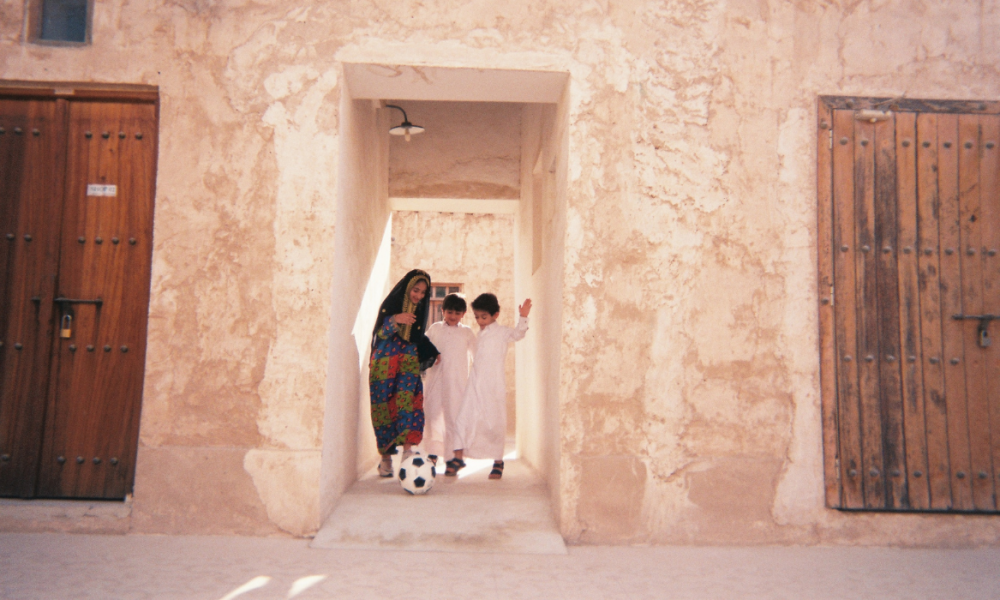
Rather than simply documenting communities from the outside, Goal Click invites people to tell their own stories. That does not mean simply handing someone a recording device and stepping away.
The team puts significant thought into choosing storytellers and preparing them to take part. Contributors receive a detailed brief and ongoing guidance so they understand what is being asked of them and feel confident creating their own material. Goal Click can make suggestions along the way, but does not dictate what someone should photograph or film.
Then comes the editing. Once the material is returned, they work with it to shape a finished story. Barrett says storytellers still retain control over the images, footage and words they contribute.
It is a relatively simple distinction, but an important one: provide enough structure to help someone tell a strong story without deciding in advance exactly what that story should be.
And it is an approach other sports organizations can borrow. A story does not necessarily require a professional photographer, videographer or highly produced campaign. Sometimes it can begin with a clear brief, some support and enough freedom for someone to show you what they notice, value or want others to understand.
For Barrett, creating that space matters.
“Many voices are marginalized, dispossessed and silenced,” he says. “Society increasingly craves relief from misinformation and sensationalist headlines. Our changing media landscape enables new voices to shape their own narrative.”
The moments only insiders can see
Sometimes the difference is visible in a single photograph.
During the 2019 FIFA Women’s World Cup, U.S. Women’s National Team player Sam Mewis photographed teammates Rose Lavelle and Alex Morgan sitting together in an ice bath.
Goal Click knew Mewis would have unusual access to her teammates. What Barrett did not anticipate was quite how intimate some of the images would feel.
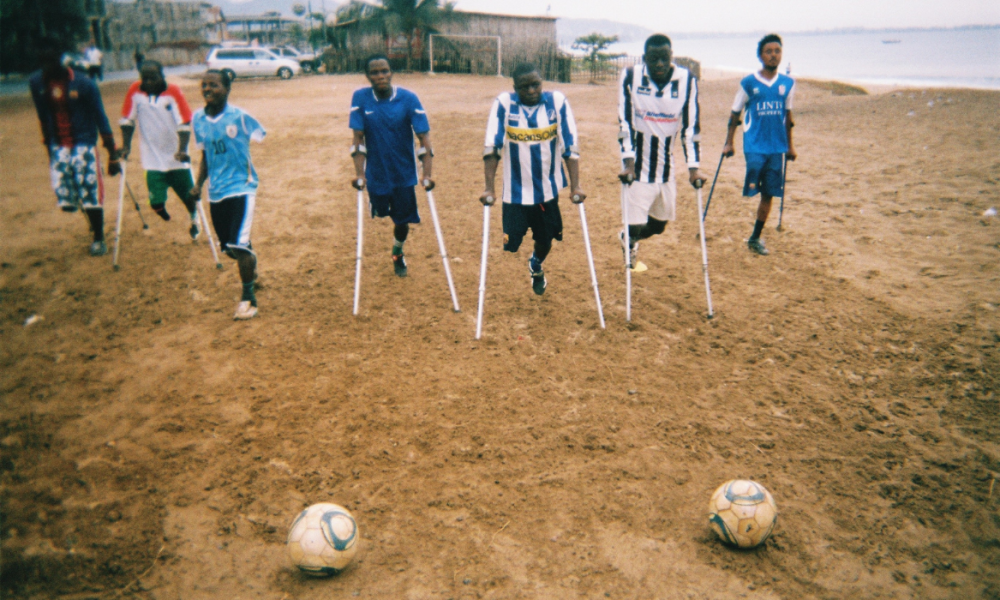
He remembers the same surprise when photographs arrived from one of their earliest stories, featuring amputee footballers on Freetown Beach in Sierra Leone. The setting was not unexpected. The intimacy and power of the images were.
Those photographs captured something an outside photographer might struggle to reach, not because of technical skill, but because of proximity.
That thinking has been part of Goal Click from the beginning.
Barrett founded the project in 2013 after studying the relationship between sport, politics and conflict at university. His research showed him how sport could open a door into much wider social and cultural stories. At the same time, he felt many of those stories were missing from mainstream sports coverage.
Goal Click started as a passion project built around a straightforward experiment – give people disposable cameras and ask them to document their own soccer lives.
The devices used to capture content have broadened since then. The idea has not.
Today, Goal Click works through photography, video, written word and spoken storytelling. Its nine-person team has shared more than 700 stories from communities around the world and they are branching out from soccer into other sports.
Twelve years, one New York street
Window To The World brings that archive into one public space.
Developed with Photoville, a New York-based nonprofit known for bringing photography into public spaces across the city, the exhibition will remain on display through June 2027. It stretches across the windows of two buildings on Fulton Street.
“I could not think of a better partner,” Barrett says. “Two organizations who believe that photography builds understanding across cultures, now sharing a space in one of New York’s most visited neighborhoods.”
Faced with 12 years of work to choose from, Goal Click organized the exhibition into three chapters: the United States, reflecting both the World Cup host country and the exhibition’s location; the Americas, tracing the tournament’s regional footprint; and the wider world.
Taken between 2014 and 2026, the photographs move through soccer communities in New York and across the United States, south through the Americas and outward to countries including Qatar, Nepal and Australia.
Together, they create a visual journey through very different corners of the game. A street in New York sits alongside a beach in Sierra Leone. An elite tournament can share space with a local community. The scale shifts constantly, but the perspective remains personal.
When viewed as a collection, the photographs offer more than a portrait of soccer around the world. They reveal the details an outsider might miss: the quiet rituals of a game day, familiar faces of teammates and fleeting moments that only come into focus when someone trusted is holding the camera.
Who gets to tell the story?
Barrett sees a lesson there for sports organizations, too.
He says organizations can easily fall into telling stories through their own language, priorities and statistics, while the people actually involved appear mostly as subjects.
“We rarely hear directly from people involved in these communities: the participants, coaches, volunteers, about their own lived experience,” he says. “I would always recommend organizations focus more on the individuals being impacted by their actions and give them the power, freedom and platform to express their perspectives directly.”
Goal Click’s own process shows that doing so does not require organizations to remove themselves completely. There is still a role for preparation, guidance, context and editing.
The difference is leaving room for surprise.
For anyone trying to tell better stories through sport, that might mean asking a few questions before deciding what the finished piece should look like. Who is best placed to tell this story? What do they want people to understand? What would they photograph if nobody handed them a shot list? And once editing starts, how do we ensure they remain part of the process?
Back at the Seaport, visitors may stop at Window To The World because soccer brought them there. But the photographs offer a way into lives, communities and cultures they might otherwise never encounter.
And for those of us telling stories through sport, they offer a reminder: sometimes the most interesting thing that happens when you hand over the camera is discovering what you never would have expected to see.
Share:


