News | Jul 22 2025

Malala Yousafzai to Champion Women’s Sports With ‘Recess’

Nobel Peace Prize laureate and girls’ education activist Malala Yousafzai is turning her lifelong passion for sports into a new initiative to drive equality through athletic opportunity. Announced at last month’s Billie Jean King Power of Women’s Sport Summit in London, the global ‘Recess’ program is designed to boost women’s and girls’ participation in sports.

Co-founded with her sports executive husband Asser Malik, Recess was inspired by her childhood in Pakistan, where boys dominated the playground and girls were sidelined. “I remember in school recess time when boys would go off to the local cricket playground and girls had to stay behind,” she shared in a CNN Sports interview. “From that point onwards, I knew that sports was something that girls did not have easy access to.”

Recess’s takes a two-pronged approach to enhance women’s and girls’ rights through the platform of sport. First, by increasing grassroots access to sports for girls, and second, by investing in professional women’s leagues. The initiative aims to correct decades of underinvestment and stigma as well as showcase women’s sports as a lucrative business.

“Women’s sports are growing fast, not just in visibility, but in influence. Yet they are still one of the most underinvested sectors in the world. From the field to the owner’s box, Recess wants to change the game for women and the girls who look up to them,” she stated in an Instagram post.

An avid sports fan, Malala regularly attends major women’s sporting events and champions athletes as role models. Recess is backed by advisors and sports legends such as Billie Jean King and Ilana Kloss, and is already setting its sights on the National Women’s Soccer League (NWSL) and the Women’s National Basketball Association (WNBA). She sees both as high-growth opportunities and leagues with strong social missions.

Malala founded the Malala Fund in 2013 to champion educational rights for girls and the following year became the youngest person to receive the Nobel Peace Prize at the age of 17. Now 27, she’s expanding her work by investing in sport. In a time of global conflict and uncertainty, she believes sport can play a vital unifying role.

“We are capable of dialogue, we are capable of coming together and sports, in history, in the current times, have proven to be that powerful way of bringing communities together…We could be competitive, but at the same time, when the game is over, we can hug each other, shake hands and recognize that we’re all one humanity,” she said in the CNN interview.

News | Jul 22 2025

EE Campaign Backs Connection & Confidence for Girls Through Football

As the UEFA Women’s EURO tournament continues in Switzerland (through July 27), EE – lead partner of the Home Nations Football Associations – is highlighting the positive power of the game on teenage girls’ wellbeing. In its new Everyone Needs a Squad campaign, EE shines a light on how football is helping teens build resilience and confidence in the face of mounting social media pressures.

The campaign is backed by a recent national survey of girls aged 13-18 from EE in collaboration with leading child and adolescent psychologist Dr Sheila Redfern PhD. Findings maintained that being part of a football network – through a local team, casual play or online communities – can significantly reduce the negative impacts of an increasingly complex digital world. The research shows that 93% of girls who play or watch football report a boost in self-confidence, while nearly seven in ten (69%) say the sport gives them a sense of belonging. Over half (57%) feel a general sense of positivity thanks to football.

In stark contrast, among those not involved in the sport, 44% say social media has negatively affected their confidence, with 27% admitting it has damaged their self-esteem. Football also appears to build stronger emotional defenses: 66% of girls involved in the sport report higher resilience compared to just 49% of their non-footballer peers. Almost three-quarters say they feel better equipped to handle negative online experiences. Three in five also feel comfortable opening up to friends and family about social media pressures – a sign that football’s supportive community fosters open communication.

“Adolescence is a time of significant developmental change; including neurological, psychological, physical and social changes that shape long-term wellbeing. In recent years, we have seen an increased spike in mental health problems… exacerbated due to increased exposure to the online world,” said Dr Redfern.

“Football gave me absolutely everything growing up. I wasn’t a confident or outgoing person off the pitch but as soon as I was playing, I could be myself and show what I could do; it was where I felt most comfortable,” said Kelly Smith, England national football legend and mother of two. “Being part of a community is so important when it comes to building confidence and the resilience young people need to navigate the world. For me, there’s no community more powerful than the football family, and I really hope as many girls as possible get to feel a part of that.”

The EE Squad digital platform is designed to help teenage girls explore and grow their own football communities. From connecting girls to local opportunities to offering confidence-building content via EE LearnSmart and sharing stories from Home Nations players, the platform shows girls that they’re not alone.

Offline, the campaign includes EE Squad Socials – in-person events where girls and their families can gather, play and celebrate football together. These free events took place in Cardiff and Brighton earlier this month, with the last taking place in London on July 27. Each event offers a mix of football activities, creative workshops, live match screenings and opportunities to meet other young fans.

Everyone Needs a Squad is rooted in EE’s wider mission to “use the power of connection for good,” building on their commitment to youth wellbeing. In the past year, the company introduced age-specific smartphone guidance for parents and expanded its “PhoneSmart” platform to help teens and families stay safe and confident online. Now, with Everyone Needs a Squad, EE is turning a summer of sport into a season of support, showing teen girls that the football family is one of the strongest teams they can be part of.

Photos: EE

News | Jul 22 2025

AFD and IOC Initiative to Tackle Youth Crime in Asia Through Sport

Photo: IOC

Agence française de développement (AFD) and the International Olympic Committee (IOC) have launched an initiative to combat youth crime and strengthen community resilience in Southeast Asia through sport. Unveiled during the June 2025 Olympism365 Summit in Lausanne, the Southeast Asia Sport and Youth Crime Prevention (SYCP) Initiative has committed to leverage sport for social development and violence prevention.

Applications are currently being accepted from applicable sport-based projects in the region. The program is inviting organizations in Lao PDR, the Philippines, Thailand and Vietnam to apply for development grants of up to EUR 150,000 over an 18-month period. Eligible projects must use sport as a tool to prevent youth crime and foster safer, more inclusive communities.

“This initiative will strongly contribute to reinforcing the role of sport in youth crime prevention strategies,” said Laureline Triby, AFD’s Head of the Social Link Division. “We are looking forward to working together with the public sector, the sport movement and civil society organizations to accelerate the contribution of sport to youth empowerment and build safer and more resilient communities.

Photo: IOC

The program is being delivered by a consortium coordinated by international charity, the Alliance of Sport in Criminal Justice (AoS), working alongside national and regional partners. The SYCP Initiative will invest in grassroots, community-led projects, as well as promote collaboration between sport and criminal justice stakeholders across Southeast Asia. It aims to build strong national and regional networks, support program delivery and promote knowledge exchange across multiple platforms. Training and capacity-building for professionals working in youth development, justice and sport will also be provided, along with support for research and advocacy to promote evidence-based policies that integrate sport into wider social and crime prevention strategies.

Tawee Sodsong, Thailand’s Minister of Justice, praised the initiative’s potential to drive reintegration and rehabilitation. “Sport offers a constructive pathway for at-risk youth and former offenders alike. We’ve seen its impact through programs like Pencak Silat in Thailand’s deep south. I hope ASEAN continues to adopt sport as a reintegration tool,” he said.

The SYCP Initiative was born out of the Olympism365 Summit: Sport for a Better World, where over 100 organizations from more than 70 countries committed to using sport to help achieve the United Nations Sustainable Development Goals (UN SDGs). These commitments aim to generate over USD 200 million in value over the next four years.

“This program is a tangible example of sport and criminal justice stakeholders working together to promote the strengths of young people and reduce risk factors leading to involvement in anti-social behavior and youth crime,” said Ollie Dudfield, the IOC’s Olympism365 Associate Director.

Interested organizations can review the application criteria and guidelines here.

News | Jul 22 2025

Enable Unveils ‘Access for All’ Program to Champion Disability Inclusion

Scottish charity Enable has launched “Access for All” to promote inclusion of people with disabilities across sport, the arts and cultural life. The three-year partnership program is based on the principles of Article 30 of the United Nations Convention on the Rights of Persons with Disabilities (UNCRPD) which addresses equitable participation.

“For over 70 years, Enable has fought for the human rights of disabled people to be active, connected and engaged in their communities. That means going beyond providing services. It means opening doors to friendship, networks, culture and sport – the things that make life full and joyful,” said Theresa Shearer FRSE, CEO of Enable.

The initiative will strengthen partnerships with national and grassroots organizations to expand opportunities in local communities and will unfold in three phases. The first focuses on making sport more inclusive and began with Enable’s support of the 2025 Scottish Disability Sport (SDS) Summer Camp this month alongside sportscotland. The long running residential camp brings together young people with physical, sensory or learning disabilities for three days of sport, connection and confidence-building.

One participant, 17-year-old Kyle Stevenson, attended the camp to step out of his comfort zone in a safe environment. After a discouraging experience with a mainstream football team, he later found a sense of purpose and community through the PAN Disability Football League. “They welcomed me,” Kyle shared. “Now I feel like I belong in sport. This camp is helping me grow even more and I hope I can help others feel the same.”

Enable’s support of Kyle reflects the deeper goal of Access for All – to empower people with disabilities to thrive and not just participate. In the future, Enable’s local branches will connect with SDS’s regional hubs to increase inclusive sporting opportunities across the country.

Another key element is a renewed collaboration with Trust Rugby International (TRI). Enable Falkirk and TRI launched a new inclusive rugby team, the ‘Bannockburn Clan,’ as part of a broader effort to promote sport as a tool for social inclusion, personal growth and skill development. “At a time when the world feels more divided than ever, this partnership is about bringing people back together. TRI Social Rugby gives us a powerful way to break down barriers, build trust, and remind communities what it means to truly belong, on and off the pitch,” said TRI co-founder Jamie Armstrong.

Beyond sport, Access For All will soon roll out phases focused on the arts and policy advocacy. The second phase will collaborate with cultural organizations to enhance representation and access in Scotland’s creative spaces. The final phase will concentrate on influencing inclusive policy, embedding Article 30 into everyday life through systems change.

With this initiative, Enable and its partners are laying the groundwork for a more equitable Scotland. In doing so, they’re ensuring that every person, regardless of disability, has the opportunity to participate fully in the experiences that shape our collective life experiences.

Photo: Enable

News | Jul 18 2025

2025 Head In The Game Coaches Training

The Head In The Game (HITG) Coaches Training schedule for 2025 includes cohort-based learning, expert-led virtual workshops, in-person experiences and a self-paced course. This year’s offerings continue to support U.S. coaches and youth leaders in sport to prioritize the mental wellbeing of the young people they serve.

Since 2023, over 2,000 coaches have taken part in HITG Coaches Training. We’re offering new and returning coaches the chance to go further with these training sessions and build long-term change.

Please note that the below coaching opportunities are open to only U.S.-based coaches, mentors and sports leaders.


Self-Paced Learning – TAPtalks 2.0

Explore the intersection of mental health, hygiene and coaching in this reflective course available for free exclusively to the HITG Learning Community through December 2025. Get practical, trauma-informed tools to use with young people right away and be part of a nationwide community of changemakers. Available through December 2025.

Register to join the Learning Community and complete the course today

Coaching in Communities Experiencing Violence (Virtual)

Led by Soccer Without Borders, this one-time special session will focus on incorporating conversations about violence and safety into play-based learning. You’ll build confidence in bringing these approaches back to your youth-facing programs and leave with a practical toolkit of activities to use with fellow coaches, participants and your wider community.

Date: Dec 4, 12-1pm EST

Registration closed

Pride in the Game: Community Conversations (Virtual)

A 6-part virtual cohort led by Doc Wayne’s Champions Network. Create safer, more inclusive athletic spaces for LGBTQIA+ youth. Learn the tools, language and confidence to create affirming sessions for every young person you coach.
Dates: Aug 13 | Sep 17 | Oct 15 | Nov 12 | Dec 10 (+1 TBD)
Registration closed. 

Coaching in Communities Experiencing Violence (Virtual)

Led by Soccer Without Borders, this 3-part series gives coaches trauma-informed tools for high-stress environments. Learn practical, trauma-informed strategies to build safer, more supportive sport spaces for youth navigating adversity.
Dates: Aug 21 | Sep 25 | Oct 23
Registration closed.

ACT! Mental Health Awareness Certification

Led by the U.S. Center for Mental Health & Sport (USC-MHS), this training provides core mental health skills, identifying challenges, de-escalating crises and connecting youth to resources.

Date: Oct 1
FREE with password.
Registration closed

TAPtalks on Mental Hygiene Basics (New York City – In Person)

Based on the TAP Method (Awareness, Development and Normalization), TAPtalks equips coaches and youth leaders with the skills and tools to make mental hygiene an integral part of their program and philosophy. By creating open conversations and normalizing mental hygiene in youth sports, TAPtalks helps ensure young people receive the holistic support they need to thrive.

This session will be facilitated by TAPcoaches, a cohort of student-athletes from New York City. Lunch will be provided!

Dates: Sep 20 (Brooklyn) | Oct 25 (Harlem, 11:00am-2:00pm)
Registration closed

Brain-Based Coaching Cohort (Twin Cities – In Person and Virtual)

A healing-centered, brain-based cohort facilitated by the Center for Healing and Justice through Sport (CHJS) to help coaches integrate trauma-informed tools into their sport spaces. This 10–12 hour, in-person learning experience will be co-designed with you to meet your needs. Perfect for coaches, mentors and youth leaders ready to level up their impact.

Cohort 1: Tuesdays, In-Person: 9:30-11:30 am in Minneapolis, MN, on October 7, 14, 21 and 28

Cohort 2: Wednesdays, Virtual: 7-8:30 pm on Zoom October 8, 15, 22 and 29

*Please note that all participants must live in Minnesota.
Registration closed

Coaching in Communities Experiencing Violence (Bay Area – In Person)

Led by Soccer Without Borders, this hands-on workshop will provide coaches with trauma-informed tools for high-stress and high-violence  environments. Through interactive discussions and practical exercises, you will learn practical strategies to build safer, more supportive sport spaces for youth.

Date: Nov 9, 10am
Location: Oakland International High School  – Oakland, CA
Registration closed.

Accelerate Mental Health Workshop

A follow-up to ACT!, designed for decision-makers, focused on organizational change and building mentally healthy sport environments. Accelerate helps you develop or refine action plans and policies that support mental health across your team or organization. You’ll identify key risk and protective factors and learn how to align your practices with a proven model for creating mentally healthy sport environments. We recommend completing ACT! before attending Accelerate.

Date: Nov 12 (FREE with password)
Registration closed.

News | Jul 08 2025

NFL Players Association Invests in Head In The Game

Beyond Sport is excited to announce that the NFL Players Association (NFLPA), the union that represents the players of the NFL, has made a $25,000 investment in our Head In The Game program as part of its charitable partner program. The NFLPA’s support marks a powerful next chapter in our commitment to youth mental wellbeing in the U.S. Together, we can advance a shared priority to improve mental health, support youth and underserved communities, and ultimately drive meaningful, long-term change.

Encompassing grants and capacity building, coaches’ trainings, targeted teen advocacy and community learning, Head In The Game has a goal to address the deep-rooted issues behind the youth mental health crisis. After training over 2,000 coaches who collectively support more than 175,000 teens, we heard one message loud and clear: coaches and leaders want to go deeper.

With the NFLPA’s investment, we’ll be able to meet that need – bringing tailored, expert-led training to cities across the country and continuing to grow a national movement that centers mental health in youth sports through Head In the Game’s virtual Learning Community. This interactive member platform provides resources, expert-led training and collaboration opportunities on the most effective ways to support youth and their communities.

This year’s Head In The Game programming includes in-person sessions and leadership cohorts in Los Angeles and the San Francisco Bay Area in California; the Twin Cities (Minneapolis–Saint Paul) in Minnesota; Chicago, Illinois; and New York City, along with a virtual cohort. Each is shaped by expert partners and tailored to meet local needs in response to a call for practical tools, community-specific strategies and increased opportunities to understand and respond to youth mental health challenges.

  • The Center for Healing and Justice Through Sport (CHJS) will lead sessions grounded in healing-centered approaches and brain science. This includes an in-person cohort in the Twin Cities focused on integrating trauma-informed practices into sport.
  • Doc Wayne will lead a six-part virtual ‘Community Conversations: Pride in the Game’ series. As part of it, youth development professionals who have completed their Creating LGBTQ-Affirming Athletic Spaces training will explore challenges, build intervention skills and collaborate with peers to create safer, affirming environments for LGBTQIA+ youth in sport through interactive, experiential learning and practical application.
  • Get Fit Fly Right is expanding its reach with a free self-paced TAPtalks course on the Head In The Game Learning Community and introducing TAPcoach. This new train-the-trainer model empowers young coaches (ages 18–24) to lead mental health-centered sessions across NYC.
  • Soccer Without Borders will host trainings in Chicago and the Bay Area, equipping coaches with strategies to support youth navigating high-stress and high-violence environments.
  • The U.S. Center for Mental Health & Sport (USC-MHS) returns with its ACT! Certification – a mental health “first aid” for sports – alongside Accelerate, a workshop for decision-makers focused on building policies that foster mentally healthy environments.

The NFLPA’s priority to advance mental health support in communities aligns deeply with Head In The Game’s mission to embed mental wellbeing into the fabric of youth sport. The program’s efforts directly support youth by creating safer, more responsive spaces through intentional coach education, organizational development and sustained peer learning. By strengthening the capacity of the trusted adults and institutions that young people interact with most frequently, this work emphasizes prevention, equity and accessibility.

With this new partnership, the NFLPA is supporting a proven, scalable model already impacting communities nationwide. Together, we can shift the culture of sport to prioritize mental health, build long-term organizational resilience and create healthier, more connected communities – goals at the heart of each of our organizations.

News | Jul 08 2025

Upskilling for Impact: Strengthening NGOs to Fuel Progress

At Beyond Sport, we’ve always believed in sport’s power to transform communities. But we also realize that true change can only happen when the people and organizations at the heart of the work are sufficiently equipped with the resources, networks, training and knowledge they need to sustain their efforts.

As we continue to invest in social change programs around the world, we’re equally committed to providing capacity-building opportunities as an essential part of our mission to champion people and communities through sport.

Over the last few months, we’ve been pleased to create spaces for learning and connection through our Sport Together Fund (STF) which focuses on refugees, asylum seekers and displaced communities with support from the New Balance Foundation. Through a virtual workshop series designed with and for NGOs, topics addressed what participants identified as most relevant – from gender equity and refugee inclusion to cross-sector collaboration and community co-building. These sessions weren’t just about skill-building; they were about peer learning, providing practical tools and sparking fresh ideas for real-world challenges. Here are some of the highlights and key takeaways from the participants:

Workshop 1: Pathways into Education and Employment for Displaced Youth

Led by French STF grantee Kabubu, this session explored what it really takes to create sport-based programs that meet the unique needs of migrants, refugees and asylum seekers. Named for the Swahili concept for “friendship through sport,” Kabubu creates inclusive spaces where refugees and locals can connect, break down barriers and build community. With the Fund’s support, Kabubu is expanding its “Coop-R Sport” initiative, offering regular sports sessions, coaching, language support, job training and workshops that raise awareness of refugee experiences.

Programs Coordinator Oceane Gangand and Social and Professional Support Manager Zoé Faes offered strategies for inclusive programming to meet the needs of displaced youth. These included intercultural learning, inclusive ice-breakers, peer-led support spaces, travel support and gender access, among other practical tools. Participants discussed how to build belonging, provide tools for engagement and create inclusive, welcoming environments to enable refugees and migrants to thrive.

Key takeaways:

  • A sense of belonging must be intentionally nurtured; it doesn’t happen by default.
  • Coaches must understand how to work across cultures, support mental wellbeing and communicate inclusively.
  • Flexible, trauma-informed program design paired with peer support and language integration builds trust and participation.
Workshop 2: Cross-Sector Collaboration

Ricardo Carvalho, founder of the Social Innovation Sports Hub (SISH) in Portugal offered insights from a different perspective and program, the Olympism365 Innovation Hub. Representing Collective365, he shared on their work in empowering refugees through community-driven innovation, providing another approach to workshop participants. Carvalho shared a powerful case study on community revitalization through sport and how they transformed abandoned sports spaces into hubs of connection and pride. Their story highlighted how sport, when combined with trust-building, corporate partnerships and community ownership, can become a powerful tool for healing and unity.

The Portugal-based nonprofit uses sports as a tool for social inclusion and community development. They work through a “quadruple helix” model, partnering with government, academia, businesses and NGOs, to design, run and scale sport for social impact initiatives. Their expertise spans project development, capacity building and sustainable sports infrastructure. Their Collective Innovation leverages the Welcome Sports Club Jobs (WSC Jobs) methodology to promote the social and economic integration of migrants and refugees, creating a pathway to autonomy through sports and employment.

Participants learned that cross-sector collaboration, when done right, can be transformative, not just for vulnerable communities but for every stakeholder involved. The process demands patience, humility and a shared vision but the long-term rewards like stronger communities, impactful programs and inclusive growth are worth the effort.

Key takeaways:

  • Co-designing community sports courts with artists and youth fostered pride and ownership.
  • Success depended on sustained partnerships with NGOs, government and corporates like Decathlon.
  • Navigating informal vs. formal partnerships and the power dynamics in both was critical to long-term success.

“These types of events are useful for anyone wanting to gain knowledge and experience from others in similar positions who are working towards similar goals,” said a workshop participant.

Workshop 3: Female Inclusion

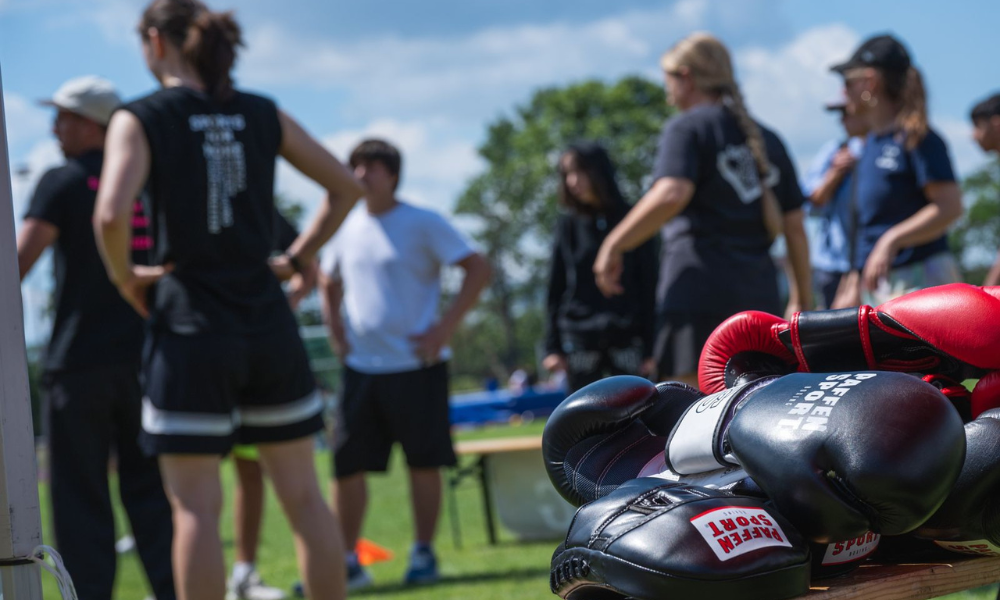
German STF grantee SPORTS for MORE E.V. promotes integration, wellbeing and personal growth in safe, inclusive spaces. They spotlighted how their youth boxing initiative is breaking down barriers for girls and young women, especially refugees and migrant youth, through safe, female-led spaces.  The STF grant has funded boxing workshops at refugee housing in Berlin and they are now expanding to include weekly girls’ and women-only sessions.

Managing Director Marike Ingwersen and Chief Purpose Officer of Communications and Fundraising Sandra Holtermann from SPORTS for MORE shared an insights on challenges and breakthroughs in engaging migrant girls in sport. With boxing and social development work as a foundation, they shared their approach to creating safe, supportive and empowering spaces for young women backed by peer mentoring, flexible schedules and strong female role models.

Participants received strategies and tips to boost girls’ and women’s participation. They learned to create girl-only sessions and spaces, implement childcare for mothers and educate communities to challenge preconceived gender stereotypes, among other initiatives.

Key takeaways:

  • Peer mentorship, flexible scheduling and female role models are vital for engagement and retention.
  • Family involvement (especially mothers) helps address cultural barriers to girls’ participation.
  • Female-focused sport isn’t just about access, it’s about redefining gender norms and building leadership.
Workshop 4: Engaging Participants to Co-Build/ Shape Activities

The final session was led by STF grantee Yoga and Sport with Refugees (YSR) Founder Estelle Jean. She unpacked the principles of co-building and creating programs with, not for, communities. Founded in 2017 and based in Greece, YSR uses sport to bring together refugees and local communities. They believe that sport can break down ethnic and religious barriers, creating a safe space for continuous learning and development between cultures where the overall community benefits. Co-building is central to their work, involving both participants and coaches/volunteers.

Workshop participants learned about creating ways for their own program participants to share ideas, actively listening and following up with suggestions and feedback. This also includes trying monthly co-designed sessions where participants help lead programming and using gamification to increase engagement and creativity.

Key takeaways:

  • Start with listening – learn what communities want and how they define success.
  • Build trust before solutions. Transparency, humility and shared ownership are non-negotiable.
  • Use storytelling to shift power, elevate community voices and gain broader stakeholder buy-in.

“Beyond Sport brings together industry-leading sports for development professionals and supports participant projects with engaging workshops. Super grateful for the opportunity to be a part of this webinar series!” said a workshop participant.


Across all four workshops, one theme rang clear: effective sport for development work is community-rooted, inclusive and adaptive. These sessions didn’t just deliver knowledge; they sparked peer connections and reminded us of the importance of slowing down, listening deeply and building with intention.

Stay tuned for the next round of workshops in the series! Please reach out to [email protected] to get involved or for more information.

Beyond Sport launched the Sport Together Fund in May 2022 to provide grants and capacity-building assistance to non-profits, sports clubs and collectives that are aiding communities facing conflict, displacement and human rights violations.

News | Jul 08 2025

ESPN Announces 2025 Billie Jean King Youth Leadership Award Honorees

ESPN has announced the 2025 Sports Humanitarian Awards nominees, including the honorees of this year’s Billie Jean King Youth Leadership Award. These three national and 20 regional recipients embody a passion for sports and a commitment to leadership and service across the United States. The national honorees will be recognized during the 2025 ESPYS in Los Angeles, California, which will be televised on July 16.

“At ESPN, we believe in the profound ability of sports uniting people, inspiring hope and driving real change,” said Kevin Martinez, vice president of ESPN Corporate Citizenship. “The Sports Humanitarian Awards reflect that belief by honoring the athletes, teams and organizations who are using their platforms not just to compete, but to serve and to lead with purpose. Now in its 11th year, this event continues to be a cornerstone of our commitment to social impact, and we’re proud to celebrate this year’s finalists and honorees as part of ESPYS Week.”

The Billie Jean King Youth Leadership Award celebrates and honors young changemakers who are using the power of sport to make a lasting impact in their communities. National honorees will receive either a $10,000 college scholarship or a $10,000 charitable grant to an eligible nonprofit aligned with their mission. Regional honorees will receive a one-time $2,500 scholarship or charitable grant.

Meet the Honorees

Maegha Ramanathan – Dublin, California: Founder of Girls4Sports, Maegha is dedicated to breaking down gender barriers in athletics by expanding access to sport for underserved girls. After experiencing sexism as a competitive swimmer, she channeled her frustration into action to launch a youth-led nonprofit that now spans 20 states with 1,500 volunteers. Girls4Sports has empowered 39,600 girls through 250 sports programs and donated more than 10,350 pieces of equipment to 70 schools, hospitals and shelters. From free seasonal sports camps and advocacy workshops to launching Dublin High School’s first-ever girls’ flag football team, Maegha is dedicated to using sport to advocate for gender equality, leadership development and inclusivity.

Rishin Tandon – Issaquah, Washington: Youth climate advocate, Rishin founded YESS (Youth Eco Sports Scorecard) to address the intersection of environmental sustainability and sports equity. Concerned by the inequities he saw in youth sports, from practices canceled due to poor air quality to long gas-powered commutes, Rishin recognized that environmental challenges often hit under-resourced communities the hardest. With support from global climate experts and insights from 13 sports, YESS evaluates teams across five impact areas, including transportation and climate readiness. The grassroots tool has already led to real change: 46% of participating teams now use refillable water bottles regularly and half have adopted safety protocols for heat and air quality.

Ian Waite – Boca Raton, Florida: Ian founded Bigger Than Sports (BTS) after witnessing a former teammate struggle with life after graduation – stuck in a minimum-wage job without guidance or support. Determined to support student-athletes from underserved communities post-high school, he created a Gen Z–led nonprofit that turns athletic skills like discipline and teamwork into tools for lifelong success. Through a peer-to-peer mentorship model, BTS has helped 100% of its first-year mentees develop structured post-grad plans, with all reporting increased confidence and stronger support networks. Today, BTS operates in six high schools across two states, reaching over 300 families through community-centered tournaments and a summer camp that blends sports, mental health and leadership development.

In addition to the three national honorees, the following young people have been named regional recipients:

  • Julia Banuelos, California
  • Indigo Bruehwiler, West Virginia
  • Daryl Fletcher, Maryland
  • Ezra French, California
  • Chris “CJ” Matthews, Georgia
  • Sydney Mednik, Maryland
  • Maggie Munson, Wisconsin
  • Isabelle “Izzy” Murphy, Massachusetts
  • Marlies Nauman, California
  • Olivia Ohlson, Illinois
  • Arden Pala, California
  • Emily Pape, New York
  • Josephine “Josie” Portell, Missouri
  • Taylor Roberts, Tennessee
  • Amy Schwem, Virginia
  • Emerson “Emmy” Su, California
  • Vick Tan, Minnesota
  • Niam Taylor, California
  • Leah Wang, Texas
  • Brianna Zhang, Michigan

Beyond Sport manages the application process and facilitates the selection phase of the Billie Jean King Youth Leadership Award program.

News | Jul 08 2025

Breaking Barriers, Building Resilience: Tennis Supporting Youth Mental Health in NYC

In recognition of National Minority Mental Health Awareness Month in the U.S., we’re highlighting Head In The Game (HITG) grantees Kings County Tennis League (KCTL) and Harlem Junior Tennis and Education Program (HJTEP) who are using tennis to empower Brooklyn and Harlem youth in New York City.

KCTL and HJTEP are leading a movement that has reimagined tennis as a tool for mental wellness and opportunity. Founded in 2010, KCTL runs free tennis and education programs at public housing developments and children’s and community centers in Brooklyn, addressing barriers to access and creating safe spaces for learning, growth and play. Founded in 1972 on 143rd Street in Harlem, HJTEP provides tennis instruction, academic support and wellness programs to youth ages 5–18, helping them build resilience, confidence and life skills on and off the court. Together, the organizations are expanding access to the sport, breaking down systemic barriers and supporting youth mental health, fitness and success.

Collaborating for Holistic Support

KCTL and HJTEP have built a partnership that is enabling them to reach youth across boroughs, offering shared programming that is building confidence and community. Together, the organizations provide high-quality, free (KCTL) and low-cost (HJTEP), tennis and education programs that prioritize physical and mental wellbeing, reshaping public courts and enriching young lives in neighborhoods where life-skills support can be in short supply.

“Over the last few years, KCTL and HJTEP began offering opportunities for our youth to play together through field trips to HJTEP’s tennis center. These play experiences show youth how friendships can be made by participating in the sport, learning that there is a bigger “tennis community” that they are part of,” shared Mara Mazza, Deputy Executive Director of KCTL.

These joint events and participation in annual American Tennis Association (ATA) tournaments help young people connect, see themselves represented in tennis and feel part of a wider community. “The ATA, the oldest African-American sports organization in the U.S., has long created opportunities for Black athletes. These events lets our youth meet Black junior players from across the state,” said Mazza.

“The KCTL-HJTEP partnership has greatly strengthened our ability to support BIPOC youth, especially around mental health,” said Simone Spigner, Director of Programming at HJTEP. “By joining forces, we’ve integrated specialized mental health support to tackle anxiety, depression and trauma that disproportionately affect youth in public housing. Our shared commitment means we’re actively working to combat mental health stigma, creating safer spaces where these kids feel seen and heard.”

Understanding the Challenges

Mazza shared that many youth in the neighborhoods the organizations serve face steep barriers to wellness – including economic hardship, systemic racism, overcrowded housing and limited access to recreation – all of which intensify stress and anxiety. KCTL and HJTEP’s are therefore supporting spaces that foster emotional growth and resilience. “We aim to equip them with coping strategies and build confidence, ensuring their well-being is prioritized alongside their athletic and academic growth,” said Spigner.

94% of KCTL’s youth and 85% of HJTEP’s identify as Black, Indigenous, People of Color (BIPOC).  The kids, many of whom live in public housing, face higher risks of poor mental health due to structural inequalities and historical disinvestment. The partners step in where other systems may fall short, providing opportunity and reclaiming space for their participants – physically and emotionally – through sport.

KCTL’s model brings tennis programs to children living in and around New York City Housing Authority (NYCHA) developments, turning them into safe places to play and grow through tennis.  “Even with this approach, these challenges underscore the need for culturally responsive, community-based mental health support systems tailored to BIPOC youth, particularly those living in public housing,” said Mazza.

Reimagining Possibility Through Tennis

Mazza explains that tennis is a powerful tool for supporting youth mental health, as it helps youth develop resilience, confidence, social connection and healthy coping skills through structured play and exercise.

KCTL’s model brings tennis programs to children living in and around six NYCHA developments in Brooklyn, turning underused courts or blacktop spaces into places to play and grow. In 2024, 125+ volunteer coaches helped KCTL deliver 2,000+ hours of free programming to nearly 900 youth, more than a third of whom lived in public housing.

“Our courts are safe spaces where youth can express emotions. Our staff and volunteer coaches are trained to help them process feelings, such as disappointment and self-doubt that come with failure, in a healthy way. Through playing the game and receiving support from our coaches, our youth are learning to manage stress and stay calm in challenging situations within the context of competitive tennis play,” said Mazza.

HJTEP also uses tennis to teach skills such as resilience and self-discipline that directly transfer to daily life. “We integrate mindfulness practices and provide direct access to mental health resources. Our coaches and tutors guide students through challenges and celebrate growth, showing them how to manage emotions and build confidence. This holistic approach ensures that beyond just tennis skills, students develop strong emotional intelligence and mental wellbeing for life,” shared Spigner.

Breaking Stigmas Through Head In The Game

Through HITG, KCTL and HJTEP are reshaping their coaching models with healing-centered training from experts like the Center for Healing and Justice Through Sport, Doc Wayne and the U.S. Center for Mental Health and Sport.

“We have incorporated elements of what we learned through the HITG mental wellness curriculum into our trainings, which has helped coaches to normalize mental health conversations, create affirming, stigma-free spaces and provide ‘first-aid’ style support,” said Mazza.

HITG has also strengthened HJTEP’s approach. “It’s truly enhanced how our coaches address mental wellbeing, giving them tools to spot struggles and create safe spaces. Plus, the digital resources provide vital support for both teens and their families beyond the courts. Ultimately, HITG strengthens our holistic approach, ensuring we’re nurturing mentally strong and well-rounded individuals,” said Spigner.

By weaving mental wellness into every serve and swing, KCTL and HJTEP are destigmatizing conversations and modeling new pathways for support.

Representation and Transformation on the Court

For many KCTL and HJTEP youth, seeing athletes like Coco Gauff, Frances Tiafoe and the Williams sisters succeed has been transformative. These role models challenge stereotypes and prove that tennis belongs to everyone. “Their visibility helps our youth develop a multidimensional sense of self,” said Mazza.

Each time a young player takes the court, they’re claiming space in a sport that has historically lacked diversity, paving the way for future athletes. “Seeing athletes who look like them dominating a sport like tennis, sends a powerful message that they belong here and can achieve anything,” said Spigner.

Cristian Ramos, a Bronx native and HJTEP alum, embodies this transformation. He joined the program during the pandemic, struggling with isolation and uncertainty. Tennis gave him structure and community, but it was his coaches’ support that made the difference. “They’re always there for me,” explained Cristian. “Not just to teach tennis, but to offer guidance and support. They genuinely care about my success and are helping me become a better person.”

Tennis helped him build resilience, focus and confidence. Now a junior at Fordham University, a college athlete and a coach at HJTEP, Cristian is paying it forward. “It’s about more than just hitting a ball; it’s about providing a nurturing community, equipping young people with emotional tools and building the mental fortitude needed to thrive. Cristian is a testament to the power of sport combined with dedicated mentorship, building champions both on and off the court,” said Spigner.

The Work Ahead

KCTL and HJTEP are rewriting the narrative which has long viewed tennis as a sport of privilege. Through their work, they are showing how it can be a tool for social justice, mental wellness and empowerment. By merging sport, mentorship, education and mental health advocacy, KCTL and HJTEP are proving that with the right support, every young person, regardless of race, zip code or income, can rise.

News | Jul 08 2025

Turning Trash into Opportunity: How Arena Recycling Is Building a Cleaner, Greener Tanzania

In the heart of Dar es Salaam, Tanzania, a social enterprise is flipping the script on plastic pollution. Arena Recycling Industry is not just cleaning up the environment; it’s transforming discarded plastic into eco-friendly building materials and creating jobs in the process. As an Enterprise365 funding recipient of the Olympism365 Innovation Hub, the organization is addressing plastic waste through a circular economy approach and exploring how sports can be a powerful tool in fostering environmental stewardship.

Founded in 2020, the enterprise is dedicated to producing eco-friendly building materials made from both recyclable and non-recyclable plastic waste, revolutionizing construction practices and providing affordable housing solutions for low-income communities. But Arena Recycling’s impact goes far beyond infrastructure. Through a unique blend of community engagement, environmental education and sport, the organization is empowering young people to become active stewards of their environment. Their now-renowned Beach Football and Clean-Up Campaigns use the power of play to inspire climate action, shifting mindsets about plastic from pollution to potential.

We spoke with Hellena Sailas, Founder and General Director of Arena Recycling Industry, to learn more about her journey, the enterprise’s mission and how sport is helping spark a grassroots environmental movement across Tanzania.

How did Arena Recycling Industry begin and what inspired its mission?

I grew up in a region where the ocean was something I only saw on TV, always sparkling, clean and full of adventure. I dreamed of living in Dar es Salaam, a beautiful coastal city along the Indian Ocean that felt like the gateway to everything I’d imagined. In 2018, that dream came true. The first thing I did when I arrived was head straight for the beach. I couldn’t wait to see the ocean tides and play in the waves.

But when I got there, my excitement turned to heartbreak. The beach was covered in trash, plastic bottles, wrappers and debris everywhere. It looked nothing like the clean, serene places I’d seen on TV. I remember standing there, asking myself: Why can’t we clean this up? Why aren’t there trash bins? People around me laughed. They said, “You can’t control waste here.” That moment stuck with me.

Instead of accepting it, I began researching how other countries manage waste. I discovered concepts like the 3Rs: Reduce, Reuse, Recycle and realized recycling wasn’t just environmental, it was also economic. It was a business. In 2019, with no funding and only a few friends, I started raising awareness in primary schools. We quickly saw how new the word ‘recycling’ was to many people.

From there, we organized beach cleanups, but we faced another dilemma: Where do we take this plastic? Dumping it again felt like a cycle with no end. That led me to study plastic recycling in depth. I read about technologies that transform plastic into oil, fuel and building materials. I was drawn to the idea of making construction products because I saw a real need in our communities for affordable, durable materials.

So, I began experimenting right from home. It wasn’t easy, but in 2020, I officially founded Arena Recycling Industry. What started as a personal disappointment at a dirty beach turned into a mission: to clean our coasts, empower our people and turn waste into opportunity.

How does your circular economy model work and what makes your materials unique?

Our circular economy model starts with plastic waste collection through cleanups, partnerships with community members and local waste pickers. Instead of that waste ending up in landfills or polluting the ocean, we give it a new life.

We clean, sort and process the plastic using semi-automated machines, mixing it with sand to produce strong, affordable building materials like paving tiles and boards. Our process uses no water or cement, which makes it even more sustainable. This approach not only reduces pollution but also creates jobs and educational opportunities, especially for youth and women in underserved communities.

What makes our materials unique is their performance. They’re three times more durable than concrete, waterproof, anti-fungal, anticorrosive and can last up to 60 years. At the same time, they’re cost-effective, making quality infrastructure more accessible to communities that need it most.

What challenges are you addressing in Tanzania through your work with plastic waste?

Right now, in Tanzania, plastic is becoming a “hot cake.” Everyone is jumping into it; people are setting up collection centers, trading waste like a new hustle. While that shows growing awareness, it also creates a challenge: the focus has shifted to short-term profit over long-term environmental or social value. A lot of plastic gets collected, but not all of it is responsibly managed. Some ends up being exported, dumped or stockpiled without proper recycling infrastructure. There’s also little transparency or standards in the market and many people don’t understand what happens to the plastic after it’s collected.

At Arena Recycling, we’re trying to go beyond just collection. We want to create a closed-loop system, one where plastic is not only removed from the environment but transformed into something that will stay useful for decades, like our eco-bricks and Wood Plastic Composite (WPC) materials. That’s the real impact. We’re also addressing the lack of public education, the gap in technical skills and the limited support for innovation in this space. Recycling can’t just be a trend, it has to be a movement that’s grounded in sustainability, inclusion and long-term thinking.

Tell us about your Beach Football & Clean-Up Campaigns. Why are they so effective?

It’s a simple but powerful model that uses sport as a catalyst for environmental action and youth engagement. We invite local youth to participate in a beach football match. But before anyone kicks a ball, they take part in a coordinated beach clean-up. Together, we collect plastic waste, talk about where it comes from and why it matters. Only after that do we play the game. It’s not just a clean-up, it’s a community experience.

It’s effective because football speaks a universal language. It brings energy, pride and a sense of teamwork, especially for young people who often feel excluded from decision-making. By connecting the joy of sport with the responsibility of stewardship, we’re planting seeds of awareness in a way that feels natural, not forced.

What’s even more powerful is that many of the participants go on to become advocates themselves. They start asking questions at home, in schools and even collecting waste beyond our events. Because we believe that this isn’t just about cleaning beaches, it’s about shifting mindsets and building a generation that sees plastic not just as waste, but as a resource.

How does sport help you engage youth in climate and environmental action?

Sport, especially football, is a bridge. It brings people together regardless of background, education or income. For us at Arena Recycling, sport isn’t just recreation, it’s a strategy. We use it to spark conversations, build trust and create a safe space where young people feel seen, heard and motivated to act.

When we organize beach football matches, we’re not just hosting games, but we’re creating moments of reflection and transformation. Before every match, participants join in cleaning the beach. It shifts their perspective: suddenly, the same place they want to play in is filled with waste and they are the ones helping to restore it.

This connection between the environment and a beloved activity makes the issue personal. Young people start to see themselves as protectors of their own spaces. The joy of playing gives them ownership and the clean-up gives them purpose. Sport also builds leadership and teamwork, qualities we need for climate action. And because it’s fun and non-judgmental, it attracts even those who wouldn’t attend a “climate meeting.” That’s why it works.

Can you share a story of how Arena Recycling has transformed someone’s life?

One story that stands out comes from a young man named Rashid who lives near the Kigamboni coastline in Dar es Salaam. When we first met him during one of our beach clean-up and football campaigns, he was unemployed and mostly disengaged. He told us that he thought cleaning the beach was “a government job” and that plastic waste was just part of life.

But after joining a few of our events, something changed. He started showing up early, helping organize tools and asking questions about recycling. When he learned that the plastic we collected could be turned into building materials, he was shocked. It was the first time he’d seen waste as something with value.

We invited him to visit our factory. After seeing the process – from trash to tiles – he asked if he could volunteer. Within months, Rashid became one of our most active youth advocates. Today, he’s a part-time team member, helping with sorting and awareness events in his own neighborhood. His transformation wasn’t just about getting a job, it was about finding purpose. He now tells others, “I used to walk past the trash. Now, I see a future in it.”

What’s next for Arena Recycling? And what’s your message this Plastic Free July?

What’s next for Arena Recycling is growth with purpose. We’re working to scale our production capacity, introduce new eco-friendly construction products like WPC and reach more underserved communities across Tanzania and beyond. But scaling for us doesn’t just mean producing more, it means creating deeper impact with more jobs, more clean coastlines and more people seeing plastic not as a problem, but as a possibility.

This Plastic Free July, our message is simple: you don’t need to wait for perfect conditions or big funding to start change. Arena Recycling began with a beach visit and a painful realization, but we turned that into a mission. Everyone has a part to play. Whether it’s picking up one bottle, teaching a child about waste or supporting local innovators – small actions matter. The world won’t be transformed by the loudest voices alone, but by consistent, committed hands. Let’s create cleaner, stronger and more hopeful communities together.

How has being part of the Olympism365 Innovation Hub helped you?

Being part of the O365 Innovation Hub has been a transformative journey for Arena Recycling. The grant we received allowed us to purchase a larger crushing machine. Before joining the program, we could only process about two tons of plastic waste a day. Now, we’re crushing up to five tons daily, doubling our recycling capacity and creating more impact on the ground.

But the support wasn’t just financial. Through the workshops and training, our team gained practical knowledge in business strategy, impact measurement and storytelling. We’ve also expanded our network significantly, connecting with other innovators, mentors and potential partners who are as passionate about sustainability as we are.

The Hub also enabled us to scale our beach clean-up and football campaigns. With new resources like jerseys, balls and shoes, we’ve been able to engage more youth and communities, making our environmental education more effective and exciting.


Arena Recycling Industry is proof that innovation doesn’t always start in labs or boardrooms. Sometimes, it begins with heartbreak on a polluted beach and a refusal to look away. Today, they’re turning waste into opportunity and sport into a force for change. Click here to learn more about the O365 Innovation Hub recipients.