News | Aug 27 2026

Culture, Community and Play Come Together at Cairns EDOR Carnival

A traditional Indigenous game from Far North Queensland brought more than 200 people together last month, connecting sport with culture, community and opportunities for young people. 

Supported by Aspire Community FIELD2FUTURE, a Cairns-based organization using sport to create opportunities for young people and strengthen local communities, the 2026 Cairns NAIDOC EDOR Carnival welcomed 22 teams, more than double the number that took part in 2025. Players, coaches, officials, volunteers, families and supporters joined the event alongside Harbrow Mentoring Australia, Our Future Mentors Indigenous Corporation and other local partners. 

NAIDOC Week is an annual celebration of the history, culture and achievements of Aboriginal and Torres Strait Islander peoples. At the Cairns carnival, that celebration centered on EDOR, a Traditional Indigenous Game originating in Far North Queensland that creates opportunities to share cultural knowledge, storytelling and traditional practices through play. 

The carnival was supported through Futures in Motion, a collaboration between New Balance Foundation and Beyond Sport focused on positive youth development through sport. 

For Aspire, EDOR offers a particularly accessible way to put those goals into practice. Julie McNeil, Aspire Community CEO, says the game is widely played by Aboriginal and Torres Strait Islander peoples, particularly across Northern Queensland and Northern Australia, and can be used across different sports as a coaching tool. Its affordability, inclusivity and accessibility make it, in her words, “a real example of breaking barriers to support increased access to regular physical activity.”

Young people weren’t simply there to play. The carnival connected them with Elders, cultural leaders, mentors and peers while creating opportunities to develop confidence, leadership and stronger social ties. One participant captured what made the experience different: 

This was the first time I had played in a carnival where I felt really connected to both my culture and my team. It wasn’t just about sport, it was about community.

That connection between development and culture is central to Aspire’s approach. The carnival was locally led, with activities shaped around local priorities and cultural protocols and Traditional Indigenous Games guided by Elders and Indigenous-led organizations. Rather than separating physical activity from identity and belonging, the model brings them together. 

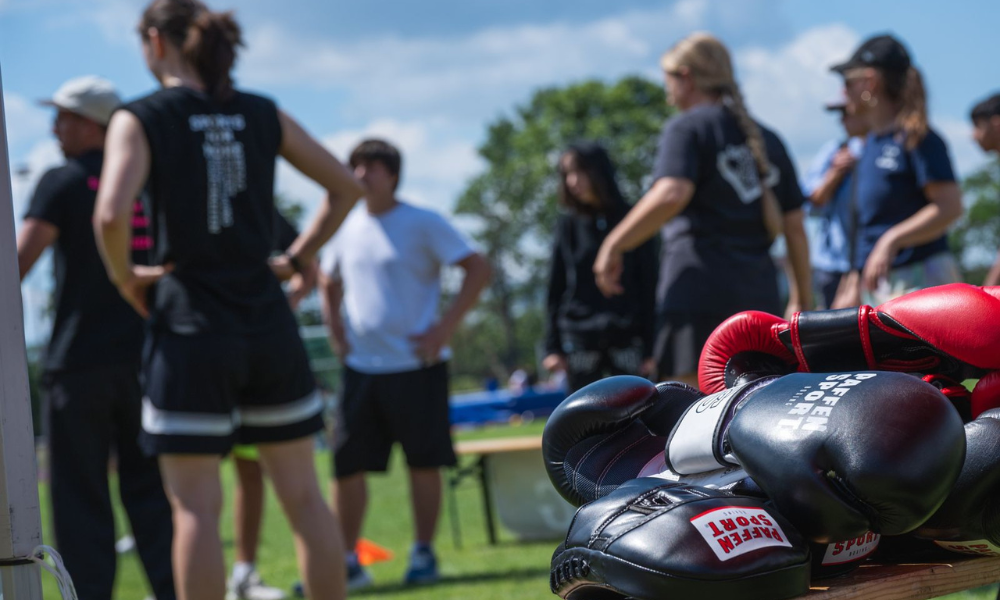
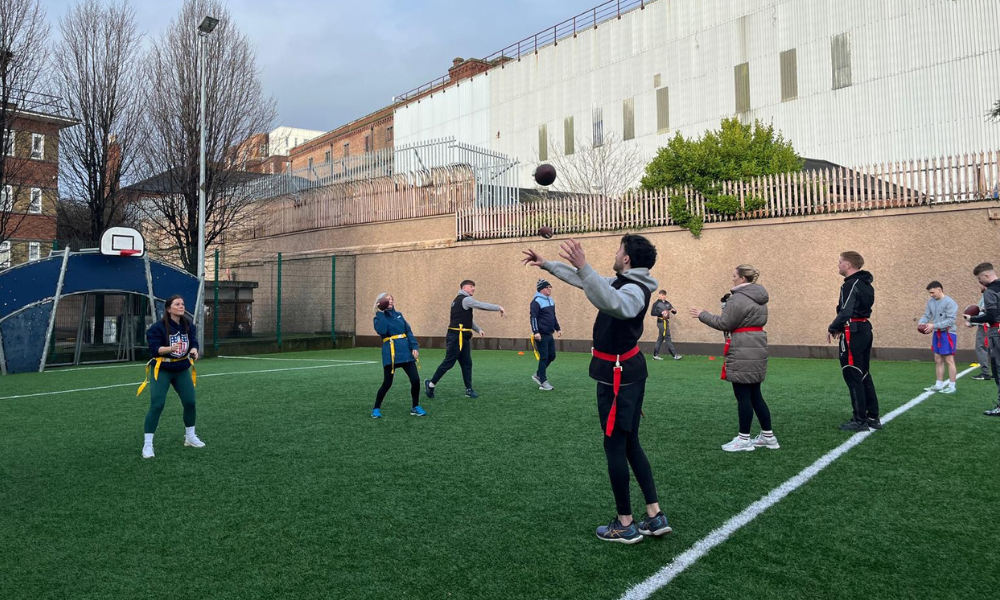
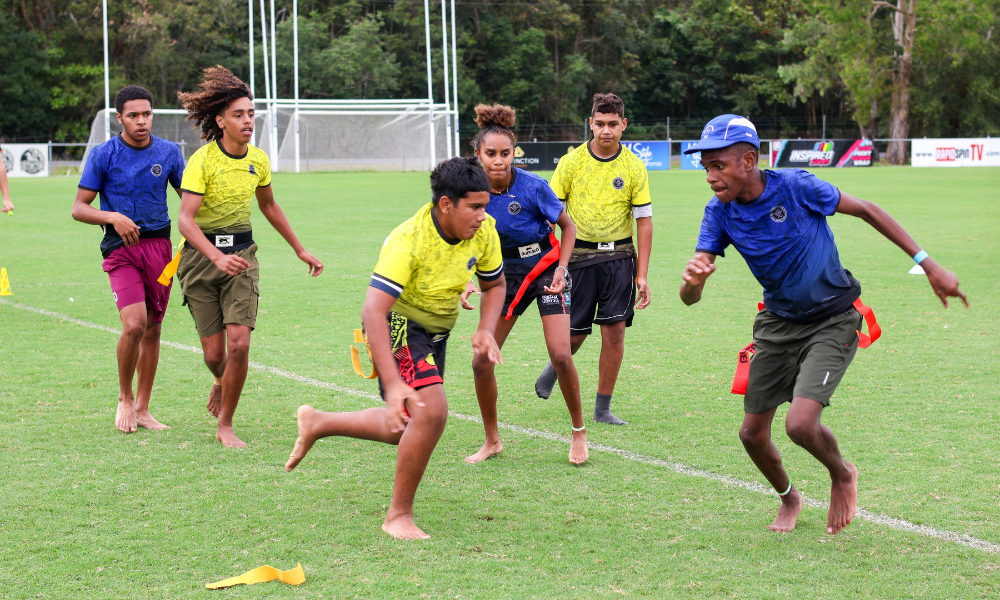
Community members celebrate at the 2026 NAIDOC EDOR Cairns Carnival | Image Courtesy: Aspire Community

Local solutions, different communities 

That same principle is shaping Aspire’s work beyond Cairns, but Julie is clear that it doesn’t mean replicating one program everywhere. 

In September, Aspire will support programs in two remote parts of northern Australia that illustrate how different local approaches can be. 

Its Gulf Program has been running for more than 20 years, centered around schools and gradually supported by local councils, businesses and volunteers. Basketball and field hockey are now embedded in a program spanning communities across an area of approximately 200,000 square kilometers. Some of the young people who originally participated are now returning with children of their own.  

Through Futures in Motion, Aspire is supporting the capacity-building side of that work. 

Pormpuraaw, a small and highly isolated community on western Cape York, requires a very different approach. Traditional organized sports can be difficult to sustain there, but EDOR has strong ties to the surrounding region. Aspire will support a Youth Summit that combines wellbeing, youth development and physical activity, including opportunities to try new sports and participate in a competition format. 

For Julie, the difference between the two programs is the point: local communities determine what will work locally, rather than being asked to fit a single model. 

Nia Clement, former Beyond Sport Program Assistant, supported the Carnival this summer | Image Courtesy: Aspire Community

A visitor’s perspective 

Former Beyond Sport Program Assistant Nia Clement spent the summer on placement with Aspire after first learning about the organization through Futures in Motion. During the EDOR Carnival, she supported event logistics and helped young people from Aspire’s programs take part in the day.  

Coming from New York City and experiencing EDOR for the first time, Nia said what stood out was seeing people “come together through culture and sport” in a welcoming environment. The experience also reinforced the importance of listening when entering a new cultural context.  

“Listening is central to building relationships, and it was especially important for me while working in a new cultural context. Building trust and relationships goes hand in hand with listening. I don’t take for granted that the community in Cairns trusted me, and from my experience, listening is the first step in building that trust. It shows you are there to learn from the community and genuinely want to contribute something positive.”

News | Aug 27 2026

BIGKID’s Youth Take on UA Next at Battersea

Beyond Sport and Under Armour brought young people from the UK’s BIGKID Foundation to a UA Next training facility for a day of movement, new experiences and connection. 

For a group of 20 teens and young adults from BIGKID Foundation, a recent visit to Under Armour’s Battersea Power Station store came with an added challenge: the chance to put themselves to the test. 

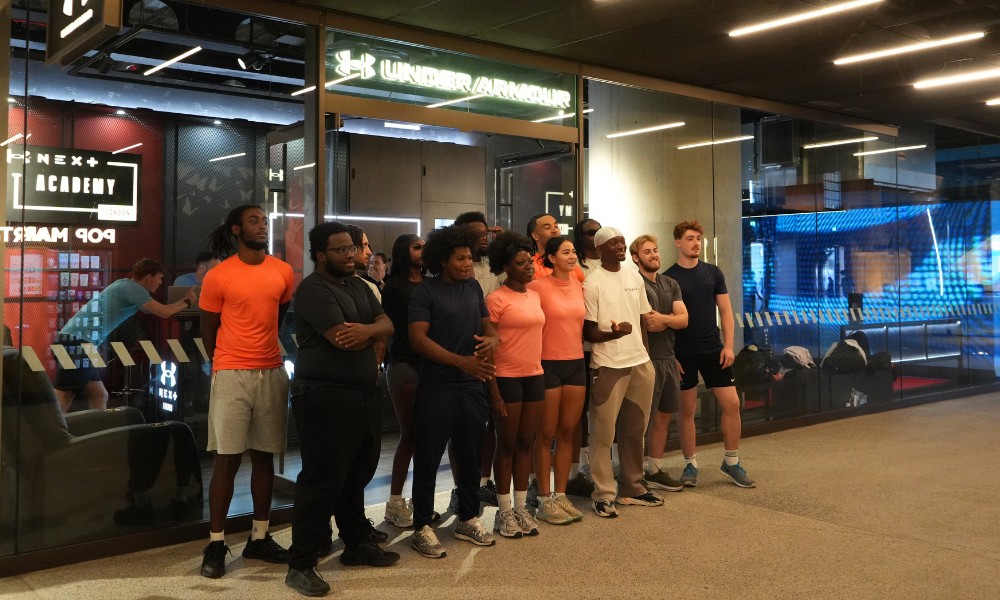
On July 27, BIGKID joined Under Armour team members and Beyond Sport at the UA Next facility, a high-tech athletic testing and training center inside the store. Once there, the group took on a series of physical challenges using specialized training equipment, testing everything from reaction time to athletic performance. The UA Next facility in Battersea is located inside the Under Armour flagship store at the Battersea Power Station in London.

But scores quickly became secondary. 

For BIGKID participants Anna Rue and Angelica, the sense of community around them was a big part of the experience. 

“BIGKID is the best,” they shared during the day. “Honestly, it’s just a big family and everybody’s just so supportive. We’re always cheering each other on, pushing each other, being competitive. And yeah, I just love everybody in the community.” 

That same spirit carried through the day. Jonathan Cobham from BIGKID reflected on seeing the young people encouraging each other throughout the different tests, while the Under Armour team saw participants embrace the experience whether they immediately excelled at a challenge or simply kept trying. 

A young person from BIGKID takes part in a drill at the UA Next facility in Battersea, London, UK | Image Courtesy: Beyond Sport

Accessing new, elite spaces 

The activation was part of Beyond Sport and Under Armour’s wider retail donation campaign supporting nonprofit community organizations across the UK and Europe that use sport and physical activity to positively impact young people. 

Alongside receiving Under Armour apparel, the BIGKID group had the opportunity to spend time in a performance environment and use equipment that many community organizations would not ordinarily have access to. 

“It gives kids and young adults opportunities to use equipment and facilities that they’re not really yet to use,” a member of the UA Next team explained. “It gives them a chance to test themselves…in an environment that is considered elite.” 

Anna Rue and Angelica were both enthusiastic about getting to try something different. Reflecting on the activities, they described the day as “really fun” and highlighted trying new exercises and testing their reaction time among the things that stood out.

“We’ve tried lots of new exercises,” they shared, adding that they were “looking forward to more collaborations together.” 

For BIGKID, that kind of exposure matters. The organization works with young people across London, using sport, mentoring and youth engagement to create opportunities, strengthen relationships and help young people thrive. 

Jonathan described experiences like the Battersea visit as a chance to introduce young people to things they may not encounter in their everyday lives, while creating another setting for them to come together and support one another. As he put it, the partnership helps “expose our young people to different experiences that [they] never would have got before.” 

Young women from BIGKID try out bikes at the UA Next training facility | Image Courtesy: Beyond Sport

Belonging beyond the day 

BIGKID later reflected that the value stretched beyond the activities themselves. 

Experiences like these, the organization shared, can help young people build confidence, make lasting memories and, importantly, recognize that they belong in spaces like UA Next. 

What came through most clearly from Anna Rue and Angelica was how closely the experience of the day was tied to the community they already have through BIGKID: trying something unfamiliar, competing with one another and cheering each other on as they did it. 

“Everybody’s just so supportive,” they shared. “We’re always cheering each other on, pushing each other, being competitive.” 

Learn more about Beyond Sport and Under Armour’s retail donation campaign. 

News | Aug 13 2026

Rick Hansen Foundation & Canadian Paralympic Committee Advance Accessibility in Sport 

The British Columbia-based Rick Hansen Foundation and the Canadian Paralympic Committee have launched a long-term partnership combining accessibility expertise with experience from across Canada’s Paralympic sport system. 

Running through 2032, the agreement will support accessibility education, research, advocacy and logistics work around major sporting events and facilities. The partners also plan to develop new initiatives supporting disability inclusion in sport and communities, with progress reviewed annually. 

The partnership builds on the legacy of Canadian wheelchair racer, six-time Paralympic medalist and disability advocate Rick Hansen. During his competitive career, Hansen won 19 wheelchair marathons, three world titles and six Paralympic medals, including two golds at the 1984 Paralympic Games in Stoke Mandeville, England. 

The following year, he began the Man in Motion World Tour, wheeling more than 40,000 kilometers through 34 countries between 1985 and 1987 to challenge perceptions of disability and call for a more accessible world. 

Established in 1988, his namesake foundation now works with governments, businesses and communities to identify and remove physical and social barriers for disabled people. Its programs include accessibility education, professional training and a certification system that assesses buildings and public spaces and recommends practical improvements. 

The Canadian Paralympic Committee works with 28 member sport organizations across Canada, supporting hundreds of athletes and the development of Para sport at every level. 

Hansen has described the Paralympic Movement as “a tremendous vehicle to create awareness of the potential of people with disabilities, break down barriers to accessibility and create social change towards an accessible and inclusive society where people with disabilities are equal.” 

A group of people, of varying ages, ethnicities, and abilities, some with wheelchairs and mobility devices, stand around a large decorative sculpture. The sculpture depicts a relief of the globe - in green and blue
The Rick Hansen Foundation Staff | Image Courtesy: Rick Hansen Foundation

From assessment to action 

The partners plan to collaborate on education and research while helping sport organizations and event leaders identify and address physical, digital and logistical barriers. 

The Foundation’s work at Vancouver’s 2026 FIFA Fan Festival offers an example of what that support can involve. Before the event opened, Foundation teams reviewed plans and drawings, visited the site and recommended practical changes, including wider accessible parking spaces and an additional service-animal relief area. 

The festival also offered accessible viewing spaces, hearing-assistance devices, wheelchairs, tables at different heights, clear signage, accessible washrooms and step-free entrances. Staff and volunteers received accessibility training. 

Through the new partnership, the Foundation could provide similar assessments and guidance for arenas, recreation centers, training sites and sporting events connected to the Canadian Paralympic Committee. Athletes and member organizations can help identify priorities based on their experience of using those spaces. 

“When we design spaces, events, and systems with people in mind, we create stronger communities and better experiences for all,” said Doramy Ehling, CEO of the Rick Hansen Foundation. 

The collaboration could also address how people access information, use changing spaces and participate as coaches, volunteers or spectators. 

“Through the power of Para sport, we see every day how sport can change perceptions, open doors, and change lives,” said Canadian Paralympic Committee CEO Karen O’Neill. “But for that impact to reach more people, the systems and environments around sport must be accessible.” 

two sled hockey athletes battle it out in front of a goal
The partnership will impact para sport events through 2032 | Image Courtesy: Pexels

Looking toward major events 

The agreement spans several major milestones, including the 40th anniversary of the Man in Motion World Tour in 2027, the Los Angeles 2028 Paralympic Games and Brisbane 2032. 

The organizations also plan to work with the Americas Paralympic Committee and other partners on accessibility around international sporting events. This could include reviewing venues and public spaces, advising organizers, training staff and sharing approaches developed in Canada with the wider adaptive and para sport community.  

By bringing accessibility expertise together with the reach and experience of the Paralympic sport system, the partnership offers a practical opportunity to shape more inclusive facilities, events and communities in Canada and beyond. 


News | Aug 13 2026

Raising the Bar on How Female Athletes Are Filmed 

A camera can show the speed of a runner’s final steps, the force behind a jump or the emotion that follows a personal best. It can also linger on a female athlete’s body in a way that adds nothing of substance to the audience’s understanding of her performance. 

New guidance from the European Broadcasting Union and European Athletics is asking sports broadcasters to recognize the difference. 

Raising the Bar: Guidelines for Respectful Media Coverage in Women’s Athletics was developed in response to athletes’ concerns about how they are filmed during competition. It draws on real broadcast examples and the experiences of Olympic track & field athletes to show how camera choices can either highlight athletic skill or leave competitors feeling exposed. 

The free resource is designed for anyone involved in filming or selecting footage from women’s athletics. It uses still images from actual broadcasts to compare intrusive, sexualized or distracting shots with alternatives that better capture technique, movement and emotion. It covers common moments across the sport, from athletes preparing in the starting blocks and recovering after a race to approaches, takeoffs and landings in the jumping events. 

The guidance is not calling for fewer close-ups, replays or creative shots. Instead, it asks a simple guiding question: does the image you’re capturing help viewers understand the sport? 

Three female track athletes running side by side at a meet, on a rubber running track
New broadcast guidelines emphasize strength, power in athletics | Image Courtesy: Pexels

Keeping the performance in view 

In track and field events, camera positions near runways, landing areas and starting lines can capture crucial detail — but they can also create intrusive images when framing lingers too long, drops to low angles, or follows athletes in moments of recovery or adjustment of uniforms. 

The guidelines promote respect, advising against prolonged focus on isolated body parts, low angles from behind or beneath athletes and slow-motion replays that do not add insight to the action. 

They also point to ways that better serve the sport. Wider shots in the pole vault can show the full sequence of approach, takeoff and clearance. Side-on views in the long jump reveal speed, rhythm and landing technique. Aerial angles and well-chosen replays can help explain how a performance is built, not just how it ends. 

Listening to the athletes in front of the camera 

For athletes, these choices can shape their experience of competition as much as their on-screen visibility. 

British Olympic pole vaulter Holly Bradshaw, who contributed to the guidelines, described athletes becoming “more focused on the cameras instead of their own performance.” She has also received social media abuse after slow-motion footage of herself and fellow competitors circulated online. 

That concern is not an argument against close or creative coverage. It is a call to broadcasters to use their tools with greater purpose. 

“Our sport offers numerous opportunities to showcase technique and the beauty of movement,” said another contributor, Serbian Olympic long jumper Ivana Španović, pointing to slow-motion footage of takeoff and stride, aerial views and explanatory graphics as ways to help audiences understand a performance. 

More than how much coverage women receive 

The debate around women’s sport has often focused on the lack of coverage it receives compared to men’s. That fight for more airtime makes the time women do have on screen to showcase their skills and educate audiences about their sport even more precious. 

Shot selection, replay length and camera focus can all influence how performance is interpreted. A close-up can capture emotion and intensity, but it can also shift attention away from athletic execution. 

These decisions are often made in seconds, but their cumulative effect is significant. They shape whether viewers understand a performance or just observe it. 

In athletics, every movement tells a story—one of strength, precision, and years of dedication. When we step onto the runway, track, or field, we showcase the very best of our sport: a fusion of power, technique, and passion and the only thing we want is to execute our best jumps.

– Ivana Španović 

a female pole vaulter wearing bright blue shorts and white shirt successfully clears the pole
New guidelines give detailed filming direction for jumping and field events, for example, the pole vault | Image Courtesy: Pexels

From broad principles to practical choices 

Raising the Bar builds on earlier efforts to make changes to coverage, including International Olympic Committee guidance on language, imagery and interviews, and Olympic Broadcasting Services briefings ahead of Paris 2024 on consistent coverage of men’s and women’s sport. 

Its value lies in its specificity. Rather than stopping at general principles, it shows how respectful coverage applies in practice across events such as the high jump, pole vault, long jump and track races — and how certain shots clarify performance while others distract from it. 

As a voluntary framework, its impact will depend on how broadcasters use it: in pre-event planning, in conversations with production teams, and in real-time editorial decisions. 

It also offers a reference point for other sports where similar questions arise, from gymnastics to swimming to beach volleyball, where framing choices can either support or undermine the athlete’s performance. 

Strong sports coverage does more than record what happened. It helps audiences understand how it happened — highlighting the timing, strength and precision behind it.  

Explore the full Raising the Bar guidelines for practical examples of how women’s athletics can be filmed with greater care, purpose and focus on performance.  

News | Aug 13 2026

The KC Current & NWSL Clubs Are Getting More Girls into the Beautiful Game, For Free 

As Kansas City welcomed the World Cup this summer, over 100 local children were given a new opportunity to step onto the field themselves. 

Through the 9th & Van Brunt Soccer League, launched by the National Women’s Soccer League’s (NWSL) Kansas City Current, in partnership with U.S. Soccer, Kansas City Parks and Recreation and the Kansas State Youth Soccer Association. The new 9th & Van Brunt league recreational league covers all associated playing costs for participating teams, coaches and families – a unique approach in a country where the rising costs of youth sports makes soccer inaccessible to many. 

The Kansas City league began on July 11, the same day the city hosted a FIFA World Cup quarterfinal and will run through August 29. 

The eight-week league also covers many of the expenses that can remain even with free registration. Every player receives a jersey, cleats, shin guards and two soccer balls. Participating coaches can access education and pursue U.S. Soccer licenses at no additional cost, while aspiring referees are offered training and development. Its inaugural teams represent local organizations Estrella De Oro, Guadalupe Centers, Kansas City Parks & Recreation, KC Wadijir, Mattie Rhodes, Ryogoku Soccer Academy and YMCA of Greater Kansas City (Carver Dual Language) 

The league is based at the 9th & Van Brunt Athletic Fields, a community park which reopened in 2025 after a $3 million renovation that included two synthetic turf fields, lighting, bleachers, locker rooms, walkways and improved drainage. The renovation marked another long-term investment in infrastructure in a city that is already home to the world’s first purpose-built women’s soccer stadium, CPKC Stadium.  

“The new soccer league at 9th and Van Brunt represents a powerful moment of possibility for the youth, coaches and families of Kansas City’s historic Northeast and the surrounding community,” said Mayor Quinton Lucas. “What’s being built here goes far beyond the game. It is a meaningful investment in people, in dreams and in the future of our city.” 

By working through organizations already trusted by local families, the club is creating an entry point rooted in community rather than talent identification. While much of youth soccer in the U.S. is built around competitive academies and early selection, this model begins with participation: community partners bring local relationships and knowledge, while the Current and U.S. Soccer provide funding, equipment, facilities and technical support. 

Supporting the role models that make play possible 

The coach and referee development built into the league addresses another common constraint in community sport. 

Many of these programs depend on volunteers, but licensing courses carry fees and require travel or time away from work and family. Providing education through the league makes formal training more accessible and leaves participating organizations with coaches and referees who have skills that they can carry into other teams and leagues. 

A similar approach is taking shape elsewhere in the NWSL. In Los Angeles, Angel City FC provides low- and no-cost soccer through 104 public recreation sites, with the goal of reaching 14,000 young people each year. Its Coach Network offers mentorship, funded U.S. Soccer licensing and connections to paid opportunities, with a focus on women, nonbinary people and coaches from communities of color. 

Gotham FC, based in the New York City metropolitan area, is using coach education to address yet another challenge: keeping girls in sport. 

In partnership with Dove, the team’s Keep Her in the Game initiative works with girls ages 11 to 14, a time when many begin to leave organized sports. During its first year, the program reached 1,783 girls, trained 97 coaches and held workshops with 226 parents and caregivers. 

Following the training, the number of coaches who felt confident supporting girls’ social and emotional needs increased by 45%. Ninety-three percent said the Gotham FC program helped them build stronger connections and chemistry among players. 

“From empowering coaches with applicable tools to creating safer, more inclusive spaces, Keep Her in the Game is helping ensure every girl not only stays in the game but thrives in it,” said former Gotham FC captain and assistant coach Michelle Betos. 

Together, the programs address different points in a young player’s experience. Kansas City is reducing the costs of entering the game. Angel City is expanding neighborhood access and coaching opportunities. Gotham is focused on the support girls need to remain involved as they grow older. 

After the tournament 

Major sporting events often promise to inspire more children to play. Whether they can act on that inspiration depends on what is available close to home: an affordable program, equipment, a field and someone prepared to coach them. 

Supported by a multiyear grant from U.S. Soccer’s Innovate to Grow initiative, the 9th & Van Brunt league has an opportunity to become more than a World Cup-season activation. 

As Joe Burger, Executive Director of the Kansas State Youth Soccer Association, put it: “Growing the game takes a village.”  

News | Aug 13 2026

When Football Meets Public Health: The Campaign to Kick Polio Out of Africa 

As one of Africa’s most celebrated goalkeepers, Nigerian international Chiamaka Nnadozie is used to protecting her team’s goal. This summer, she is helping defend something much bigger: the health of future generations. 

With the 2026 Women’s Africa Cup of Nations (WAFCON) coming to a close in Morocco, Nnadozie is among 11 footballers from Cameroon, Côte d’Ivoire and Nigeria using the tournament’s reach to rally support for polio eradication. Alongside fellow Nigerian international Francisca Ordega and Cameroonian stars Ajara Nchout Njoya and Gabrielle Aboudi Onguené, she is lending her voice to Kick Out Polio, calling on governments, partners and communities to help finish the job. 

Kick Out Polio first launched during the 2025 Africa Cup of Nations, but WAFCON 2026 marks a new chapter for the campaign, placing women footballers and women’s leadership at the center of its message. As the tournament showcases some of the continent’s biggest football stars, it offers a powerful moment to renew attention to a public health effort that has made enormous progress but is not yet complete. 

The campaign is part of the Global Polio Eradication Initiative (GPEI), which brings together the World Health Organization (WHO), UNICEF, Rotary International, the U.S. Centers for Disease Control and Prevention, the Gates Foundation, Gavi, the Vaccine Alliance and national governments. 

The timing is significant. Africa has made remarkable progress against polio in recent years, with detections of variant poliovirus across the region falling by 50% during the first half of 2026 compared with the same period in 2025. Yet the disease has not been eliminated entirely. Conflict, displacement, misinformation, limited access to healthcare and declining resources continue to threaten hard-won gains, while pockets of unvaccinated children leave communities vulnerable to outbreaks. 

For campaign leaders, protecting those gains means reaching beyond the health sector. 

“Governments and institutions alone cannot end polio. It will be the people of Africa who finish the job. That is the spirit of the Kick Out Polio campaign,” said Ramou Ndure, UNICEF West and Central Africa’s Deputy Regional Director. 

Nigerian footballers Chiamaka Nnadozie and Francisca Ordega support the Kick Out Polio campaign | Image Courtesy: Team End Polio

Soccer offers one way to bring that message into communities at scale, using one of the continent’s biggest stages for women’s sport to amplify a public-health effort women are already helping lead on the ground. 

During WAFCON, players have been encouraged to share accurate information about vaccination and speak up for continued investment. Young advocates have also issued an open letter calling on African leaders to sustain political and financial commitments to the eradication effort. 

The connection between women, sport and public health goes deeper than the athletes fronting the campaign. 

Across the continent, women typically serve as vaccinators, community mobilizers and frontline health workers, where they help health services reach children in remote, underserved and crisis-affected areas. They build relationships with families, respond to concerns about vaccination and help navigate barriers that can otherwise leave children unreached. 

The campaign also builds on decades of collaboration. Governments, health agencies, community leaders and philanthropic organizations have worked together to push polio toward eradication, with partners maintaining support even as case numbers have fallen. 

For Dr. Marie Belizaire, WHO Regional Emergency Director, finishing the job has implications far beyond polio itself. 

“Finishing polio is not simply about ending one disease. It is an investment in the health, potential and future of an entire generation,” she said. 

As WAFCON brings new attention to women’s football across Africa, Kick Out Polio is using that spotlight to keep another goal in view: reaching every child with the protection they need. Players like Nnadozie, Ordega, Nchout Njoya and Onguené are not replacing the public health workers doing that work every day, but they can help ensure the effort remains visible, urgent and difficult to ignore. 

To learn more about the Kick Out Polio campaign, visit this link.

News | Jul 30 2026

Bringing Community Innovation to IWG 2026

In a room filled with markers, sticky notes and brilliant ideas, people from around the world took on a challenging question: take a real issue facing women and girls in sport and work together to find a way forward. 

This interactive workshop was part of the 2026 International Working Group (IWG) Global Summit on Women & Sport, held July 9–11 in Birmingham, UK. More than 900 people from around the world joined the three-day gathering to share ideas and explore how to build lasting progress for women and girls in sport. 

This year’s theme, “Beyond the Breakthrough,” focused on what happens after a promising idea or moment of progress. How can people adapt that promise to different communities, sustain it over time and make sure it leads to meaningful change? 

At IWG, four Olympism365 Innovation Hub members shared this approach during a session on “Community Innovation: Design, Adapt and Sustain Gender-Inclusive Solutions,” drawing on their work in Afghanistan, Somalia, India, and Brazil, respectively: 

  • Sana Mahmud, Global Programs Director at Free to Run, has spent nearly 15 years developing sport programs with women and young people in conflict-affected and under-resourced communities, including Afghanistan. Sana represents the Collective365 strand of the Olympism365 Hub. 
  • Marian Mohamed Hussein, Founder and Deputy Executive Director of Hawa Feminist Coalition, uses sport to create safe spaces where girls and young women in Somalia can build confidence, leadership and collective power. Mariam represents the Grassroots365 strand. 
  • Renaissan Dutta, a psychologist and researcher with India’s Tarapur Social Development Society, works to make sport and psychosocial support more inclusive for marginalized communities, including women and girls with intellectual disabilities. Renaissan represents the Enterprise365 strand. 
  • Gabriela Bianchi dos Santos founded the Amazon Women’s Sports Association after seeing how safety concerns, a lack of societal support and other barriers kept women from participating in sport in Brazil’s Amazon region. Gabriela also represents the Grassroots365 strand. 

The Olympism365 Innovation Hub is a collaboration between the International Olympic Committee, Beyond Sport and Women Win. It supports initiatives using sport to address social challenges by providing funding, capacity building and opportunities to connect and learn from one another, with a focus on strengthening community-led solutions. As part of this work, it also contributes to advancing gender equality. 

Each innovator shared a challenge they currently face – a lack of trained and representative coaches, funding and resource constraints, and societal barriers for women and girls in accessing play. The workshop then moved into the “Innovation Café,” a rotating small group “World Cafe” style exercise where Summit participants brought new perspectives to each challenge. They came up with possible responses, chose which idea they would support with limited resources and considered what might stand in its way. 

The exercise encouraged big ideas, but it also asked participants to make difficult, practical decisions. Which solution could make the greatest difference? What would it take to put it into action? How might funding, culture, capacity or power affect its success? 

a group of women of varying origins sits around a round table surrounded by sticky notes, markers, and papers with questions/brainstorm ideas written on them.
A group of Summit attendees, led by Mariam Mohamed Hussein, working through the Innovation Cafe exercise | Image Courtesy: Beyond Sport

Tarryn Horner, Senior Programs Manager at Beyond Sport, led the session with Charlotte Groppo, Head of Gender Equality, Diversity and Inclusion at the IOC and Fiona Cooper of Women Win. 

The workshop gave participants a glimpse of the process Hub innovators use in their own communities: understanding a problem, trying something new, learning from it and making changes along the way. It also placed the knowledge of people doing this work every day at the heart of the conversation. 

For us, innovation is not the what, it is the how. Our innovators have learned how to put innovation into practice every day. They work in some of the world’s most gender-unequal contexts, often with limited resources, yet through human-centered design, collaboration, experimentation and an extraordinary amount of perseverance and resilience, they continue to overcome barriers. They test, refine and adapt their approaches, ultimately creating lasting positive impact for women and girls in their communities through sport.

— Tarryn Horner, Senior Programs Manager, Beyond Sport 

For Renaissan, the Summit offered a valuable platform to share her team’s work on supporting women with intellectual disabilities in India. 

“It was a huge opportunity for me to represent our initiative on women with intellectual disabilities,” she reflected. “This summit was a powerful reminder of how consistent small steps by people around the world can be huge drivers of change.” 

At the Hub booth, Summit delegates explored work from the wider portfolio of Hub innovators and chatted with NOVA, the Hub’s AI-powered companion designed to help people find useful resources, explore case studies and learn more about innovation in sport for development. 

The Summit also offered an important reminder: a breakthrough may draw attention, but lasting progress depends on what follows. People need the time, support and freedom to test ideas, learn from one another and adjust their approach. And the communities most affected need to help shape that work from the beginning. 

By bringing community innovators and global delegates into the same conversation, the workshop created space for both sides to listen, question and build together. 

three photos of various adults stopping by a booth at IWG 2026, which featured two stand-up panels flanking a video screen with information on AI NOVA and offered a glimpse into various innovations
Attendees at IWG 2026 learn about The Olympism365 Hub innovations, and get a chance to check out NOVA | Image Courtesy: Beyond Sport
Invest in the Olympism365 Innovation Hub  

Cultivate an ecosystem of innovators and social enterprises across the sport, social impact and tech sectors through the Olympism365 Hub. Launched with seed funding provided by the IOC, Beyond Sport and Women Win are seeking partners to drive further innovation.  

If you are interested in investing in the Hub and our innovators, contact us at [email protected].

News | Jul 30 2026

Head In The Game Research Published in the Journal of Sport Psychology in Action

Beyond Sport’s Head In The Game (HITG) initiative has reached a new milestone: research from the program has been published in the peer-reviewed Journal of Sport Psychology in Action. 

Since 2023, HITG has worked with young people, caregivers, coaches, practitioners and community organizations to strengthen mental wellbeing support across youth sport. The initiative has supported 43 youth-serving nonprofits and trained more than 2,000 coaches across the United States. 

“Leveling Up in Youth Sports: Lessons in Mental Health Support from the ‘Head In The Game’ Initiative” draws on two years of observations and feedback from athletes, coaches and participating organizations. It challenges the assumption that sport automatically improves mental wellbeing, showing instead that positive outcomes depend on environments intentionally designed around safety, connection and care. 

The article was authored by Meredith A. Whitley of Adelphi University and Stellenbosch University, Claudia Larrea, Senior Programs Manager at Beyond Sport, and Adam Burgess, Director of Programs at Beyond Sport. It brings together academic and practitioner perspectives to offer a practical framework for organizations looking to strengthen mental wellbeing through sport. 

We spoke with Claudia about what the research tells us, where coaches fit within a wider system of support and what comes next for Head In The Game. 

What needs to be intentionally built into a sport environment for young people to feel safe, connected and supported? 

The research makes clear that sport can be powerful, but it has to be designed to support young people’s mental wellbeing. The strongest environments are those where young people feel safe, connected and seen, and where coaches are trained to build trust, support autonomy and reinforce a sense of competence. That means going beyond drills and competition to include emotional check-ins, supportive relationships, opportunities for youth voice and practical tools for coping with stress. The research also shows that when coaches are equipped to recognize changes in behavior and start non-judgmental conversations, young people are more likely to feel supported and to talk about mental health with both adults and peers.   

Head In The Game goes beyond individual coach training to advocate for changes in relationships, organizational culture and policy. Why was it important to work across all three levels?

It was important to work across all three levels because young people do not experience sport in isolated moments, they experience a whole environment. Coach training matters, but a coach can only do so much if the relationships, organizational expectations and policies around them do not reinforce the same values. At the individual level, coaches need knowledge and confidence to recognize concerns and respond with care. At the interpersonal level, young people need trusting relationships where they feel comfortable expressing what they are going through. At the structural level, organizations need policies, referral pathways and shared practices that make mental wellbeing part of the culture rather than an add-on. Working across all three levels helps ensure this work is sustainable, consistent and not dependent on one passionate coach or one strong training session. 

Coaches are positioned as trusted adults who recognize concerns and begin supportive conversations, but they are not mental health professionals. What do organizations need to put in place so coaches feel prepared without asking them to take on roles they aren’t trained for?

Organizations need to create clear systems that help coaches understand both what their role is and where that role ends. Coaches can be trusted adults who notice changes, ask caring questions and help young people feel less alone, but they should not be expected to diagnose, counsel or carry a crisis on their own. That means organizations need practical training, simple tools, regular refreshers and clear referral pathways to mental health professionals or local support services. They also need crisis protocols, supervision and spaces for coaches to debrief so they are supported in the work rather than left to figure it out independently. The goal is to prepare coaches to respond with empathy and clarity while making sure the organization carries the responsibility with them. 

Participants at a Head In The Game Coaches Training in Los Angeles, California, 2023 | Image Courtesy: Mike Oberlies
What have the coaches, young people and community organizations involved in Head In The Game taught you that the research alone could not?

They taught us what this work looks like in real life, beyond the evidence base. The research can tell us that sport has the potential to support wellbeing, but the people closest to the work show us how that potential becomes practice. Coaches shared how training changed the questions they ask, how they respond to pressure and how they see their role as mentors. Young people showed us that small shifts, like a check-in, a breathing exercise, a journaling prompt or a coach making time to listen, can create meaningful moments of safety and connection. Organizations showed us that when mental wellbeing becomes part of program design, staff culture and leadership priorities, the ripple effect can be much bigger than one training. They reminded us that this work has to be practical, relational and rooted in the realities of each community. 

You’ve helped shape Head In The Game. Was there a particular moment, story or piece of feedback that changed how you thought about the program or reaffirmed why this work matters?

I still remember when we launched the coach trainings in fall 2023. In Los Angeles, we had more than 100 coaches, and the training was split into two sessions. Part one, led by the Center for Healing and Justice through Sport, focused on relationship building and trust. Part two, led by Doc Wayne Youth Services, focused on creating LGBTQ-affirming athletic spaces. The first session was crucial to the success of the second. It asked participants to be vulnerable through structured play and to get to know one another. Because of that foundation, the second session became a safer space for coaches to share their thoughts and feelings aloud, even when there were differences in opinions, experiences and perspectives.

Seeing that transformation in coaches firsthand over the span of six hours made me excited about the potential impact they could have on young people over the course of a season. Since then, I have seen not only coaches transform, but organizational leaders and organizations as well. We set out to build a program that could begin to create systems change, recognizing that this requires long-term investment. Being able to see organizational policy changes, new opportunities for organizations, participation in research studies and more advanced programming that prioritizes youth mental wellbeing has been really meaningful. We have also seen organizations use their participation in Head In The Game to unlock additional funding and deepen their commitment to this work. It has all been really special to witness. 

A Head in The Game Coaches Training in Chicago, Illinois, 2023 | Image Courtesy: Beyond Sport
The article identifies several opportunities for the future, including involving young people and caregivers more deeply and developing regional training hubs. Which next step feels most important to you, and why?

It depends on the age of the young people in each program and organization. For programs serving older youth, involving young people more deeply in shaping the work feels especially important. We have heard from young people that they want information that feels authentic, relatable and grounded in lived experience, and they are more likely to engage when messages come from peers or trusted voices. If we want Head In The Game to continue reducing stigma and supporting prevention, youth voice has to help lead it. That means co-creating resources, campaign content and learning experiences with young people, especially those from the communities HITG was designed to center. Regional cohorts are important because they can make support more culturally relevant and accessible, but youth involvement feels foundational to making sure the work stays honest and responsive. 

For programs serving younger youth, engaging parents and caregivers is essential. The culture an organization builds should reflect the values of the families engaged in the program, which means creating shared language and understanding around youth mental wellbeing. Educating parents and caregivers about youth development, and the role that sport and family involvement can play in supporting it, can have a tremendous positive impact on young people. 

As Head In The Game looks towards the future, we will ensure the work will be shaped by the young people, families, coaches and organizations closest to it. 

Read the full research article (subscription required) and learn more about Head In The Game. 

News | Jul 30 2026

HYPE Merseyside’s Young Coaches Take the Lead in New York

At home in Merseyside, England, 17-year-old Zach had progressed from simply attending sports sessions to volunteering and supporting younger participants as an assistant coach. In New York, he was asked to take the lead. 

Zach was one of 22 young people from HYPE Merseyside who traveled from northwest England to New York City this summer for a week of coaching, leadership and cultural exchange. 

“Even though I’ve had experience coaching over the years, nothing’s been like this,” he said. “I’ve always been sort of an assistant to someone. Here, I took a session and it was my session—a half-hour session that I created on my own.” 

Standing before an unfamiliar group brought a new challenge. Zach had to communicate with children from a different country, adjust to their needs and make decisions in the moment. 

“I had a group of kids listening to me and had to work out how to communicate with them,” he said. “I’ve got a different accent, a different everything to them.” 

HYPE Merseyside supports young people aged 7 to 24 across the region, particularly those living in communities where opportunities are limited. Through tailored youth activities and learning programs, the organization uses sport, volunteering and leadership to help young people build skills, reach their potential and contribute to their communities. 

The New York exchange grew out of that work. Through HYPE’s The Bridge initiative, the group connected with local sports clubs from Flag Nation, Harrison FC, Englewood Eagles and Monroe University, coaching local children and learning from coaches and mentors across the city while the New York/New Jersey region hosted the FIFA World Cup 2026. 

image to the left: A group of Hype Merseyside students in Times Square, with bright lights and advertising signs all around, image to the right: an image from Central Park in NYC, with greenery and towering buildings in the backdrop
HYPE Merseyside youth coaches in New York City in Times Square and at a World Cup fan zone | Image Courtesy: HYPE Merseyside Instagram
Finding new routes through sport 

All participants were between 16 and 18 years old and already involved in sport, predominantly football (soccer). But as HYPE Founder and Chief Executive Matthew Hougton explained, playing professionally is only one way to build a future in the game. 

“They’re looking at other opportunities to stay in the game, to make a career out of it,” he said. “Coaching, being a mentor or potentially getting a scholarship could be that route for them over the next few years.” 

Over six days, the group explored different approaches to communication, coaching and session planning. 

“We’re saying to these guys: you’re in this window of six or seven days in New York, so absorb everything and learn from everything,” Matt said. “Use it during the trip, but most importantly, when you get home.” 

Reuben saw that exchange in action while working with Flag Nation. He and his fellow coaches watched the HYPE group deliver a session, offered feedback and then challenged them to try something unfamiliar. 

“They gave us feedback and advice, but they also challenged us by giving us a new practice that we’d never done before,” Reuben said. “It was good to learn and develop as a coach with inspiration from the other coaches.” 

Another young leader, Ruby, found that the challenge required the group to communicate and adapt together. 

“We wanted to try something new and we were pushed to be challenged,” she said. “We worked on it, adapted and just went for it.” 

For George, a young person from the group who was coaching children for one of the first times, their enthusiasm stood out. 

“They seemed quite bright and interested in what we were trying to teach them,” he said. “They paid a lot of attention, they worked hard and it went well.” 

New York also gave the group a wider view of where their interests and skills might take them. 

“It’s so much bigger than you’d think,” George said. “There are so many people, so many buildings and so many opportunities. You look around and see loads of businesses, jobs and workplaces. It’s nice to get a feel for what a big city like this is like.” 

Asked to describe the week in three words, he called it a “multi-door opener.” 

Growing into a team 

Since 2023, HYPE has received support through Beyond Sport’s partnership with Under Armour, funded by customer donations in stores across Europe. For the New York trip, Under Armour provided playing, coaching and travel uniforms, as well as balls and other equipment needed to facilitate sessions.  

The matching kits helped the group look professional when they arrived at sessions, but Matt felt it also helped bring them together. 

“It makes our young people feel special, feel important and feel together as a team,” he said. 

That connection took time. Although the participants came from the same region, they represented different communities, cultures and backgrounds. Some had met only once or twice before traveling. 

Zach felt more time together before the trip would have helped the group arrive with stronger relationships. Still, he could see those connections forming as the week progressed. 

“Over the days, I think we’ll become more together,” he said. 

Under Armour also connected HYPE with the Travis Manion Foundation, whose staff and volunteers led activities on character, resilience and service.  

For Eliza, another young participant, the sessions reinforced the need to stay flexible when plans change. 

“It made me realize how we need to push ourselves,” she said. “It gave us the resilience we need in case you need to adapt your session or something goes wrong and you just need to change it.” 

To the left, a group of HYPE students cheering on England at the World Cup, projected on a large video screen. to the right, another group of students celebrating and repping England at a FIFA fan zone event
Throughout their trip, HYPE Merseyside repped their home country England at World Cup related events | Image Courtesy: HYPE Merseyside Instagram
Bringing it home 

HYPE deliberately asks participants to do things that may feel uncomfortable, particularly speaking in front of groups and leading sessions. It also encourages them to support one another because they arrive with different levels of playing and coaching experience. 

Matt wants the group to include the New York trip on their CVs/resumes and be ready to explain what they learned from it. More importantly, HYPE remains part of their lives after a particular program or trip ends. 

“At HYPE, the door’s never closed,” he said. “I can guarantee at least half of these young people over the next three or four years will come back, whether that’s as a volunteer, a paid coach, a mentor or just to check in with us.” 

Sometimes, he added, the effect becomes clear only years later. 

“You may not hear from them for four or five years, but at some point they will come back and say, ‘That was one of the best trips. Do you know where that ended up taking me?’” 

For Zach, one change was already visible. He arrived with experience assisting other coaches. In New York, the session—and the responsibility for making it work—was his. 

News | Jul 16 2026

From the Wrist to the Lab: Fitness Platforms Turning Research into Advice

From the Wrist to the Lab: Fitness Platforms Turning Research into Advice 

Nowadays, your fitness tracker no longer just counts your steps. Increasingly, it tells you when to rest, how hard to train and what your body may need next. 

That shift from recording behavior to guiding it is giving fitness platforms a growing influence over how people participate in sport and understand their health. A new collaboration between Strava and researchers at Stanford University in Northern California, U.S., is the latest sign of where the industry is heading. 

Strava, the global app best known for tracking activities such as running and cycling, announced the partnership in June. Their research will inform future tools related to training, recovery, progress and staying active throughout life. Stanford Lifestyle Medicine, the Stanford Center for Digital Health and the university’s Female Athlete Science and Translational Research program (FASTR) round out the partners on the project.  

“Sports science has always moved faster than it reaches the people it’s meant to help,” said Dr. Michael Fredericson, founder of Stanford Lifestyle Medicine. He described the collaboration as an opportunity to place research in front of people as they make decisions about their fitness. 

The involvement of Stanford FASTR gives Strava’s announcement particular weight. Women have historically been underrepresented in sports science, leaving major gaps in knowledge around training, injury, recovery and health. The program focuses on girls and women, with research covering menstrual health, fueling, bone health, injury prevention and long-term participation in sport. 

With more than 195 million users across 185 countries, Strava could carry those insights far beyond academic journals, specialist clinics and elite teams. Other fitness tracking companies are already developing their own paths from research to product. 

WHOOP, a wrist-worn device centered on sleep, recovery and training readiness, operates an internal research division. WHOOP Labs, based in Boston, MA, runs studies, tests new products and invites members to participate in research through its app and in-person at their research facilities. These opt-in studies include bloodwork and biomarker testing – unlocking more personalized insights for wearers.  

Oura, known for its smart ring, combines internal research with studies led by universities and health institutions. Its technology tracks signals related to sleep, stress and recovery, while its app includes menstrual cycle and fertility features. Researchers at institutions including the University of Tokyo and National University of Singapore have also worked to validate the device’s accuracy. 

Meanwhile, Fitbit, one of the world’s most widely recognized wearable brands and now part of Google, has also used large-scale studies to examine heart rhythm, sleep and activity. Findings have helped shape features that alert users to possible signs of atrial fibrillation. 

Together, these developments could make sport and health research more useful in everyday life. Findings that might otherwise remain within universities, professional sport or specialist healthcare can now reach someone building a new exercise habit, returning to activity or trying to understand their recovery.  

“The gender gap in sports science has left too many questions unanswered about how to best support girls and women,” said Dr. Emily Kraus, director of FASTR. She said bringing female athlete science into Strava could help girls and women “stay in sport for the long game.” 

Researchers are making strides in fitness tech | Image Courtesy: Pexels

Oura’s latest focus on menstrual and fertility features reflects a similar principle: personal advice can only go so far when the evidence behind it does not represent the people receiving it. 

But as these platforms shift from tracking to advising, new questions will emerge.  

A peer-reviewed university study is not the same as an internal product test or an algorithm trained on a company’s user data. Yet those distinctions may not be obvious to someone receiving a readiness score or recovery recommendation. 

The people included in the research matter too. Gender is one part of the picture, alongside age, race, disability, income, geography and experience with physical activity. 

Access also remains uneven. Devices, subscriptions, smartphones and reliable internet all come at a cost. Research may reach millions through wearable technology while remaining out of reach for many of the people who could benefit from it. 

There are also limits on what these tools can promise. Google, for example, cautions that its AI health coach may give incomplete or inaccurate answers and cannot diagnose, treat or monitor medical conditions. Clear explanations like this will become more important as fitness platforms move closer to offering health guidance. 

Strava has not yet announced which tools will emerge from its Stanford collaboration or when users will see them. Any academic research conducted through the partnership will remain independent and follow standard publication practices. 

That makes the collaboration worth watching. Fitness platforms are becoming powerful translators of research, with the ability to place new insights directly into people’s daily routines. Their challenge will be to do that transparently, responsibly and with evidence that reflects the people they hope to serve.